Showing posts with label Korea Times. Show all posts

Tuesday, March 24, 2009

Korea Times: Tap Water Blues by George Hogan

Sorry for the delay these days. 14 hours of teaching is hard. I did manage to squeeze in the time to submit my KT article this week...

They actually printed one that I sent in a week ago, so I guess I'll have another one this week. Maybe not.

Here it is...

Saturday, March 21, 2009

Foreigner Dating Assistance

I think we're doing just fine, but Sunoo wants to make some more cash and have proven they have no shame lying for profit.

Maybe I've been in Korea too long and suspect that everything is somehow "anti-foreigner", but this one seems a little suspect.

Sunoo, the country's second-largest matchmaking firm by market share, last month kicked off a matchmaking site for foreigners, becoming the first local agency to offer services to non-Koreans.

With an online registration (www.couple.net) fee of $20, members can instantly access Sunoo's client database of 15,000 men and women ― 200-300 Koreans who speak English and currently 50 foreigners residing in Korea ― explained Erica Oh, global team manager of Sunoo.


The article goes on to talk about safety and other concerns with managing foreigners, but I see this as an effort to put foreigners in relationships with anybody else BUT Koreans. Besides, Korean women can't actually fall in love with foreigners. They just want to study English.

Am I losing perspective?

Korean Tap Water

Last night a car engine backfired close to my bedroom window, jostling me from my seemingly deep slumber. Nonetheless, I welcomed the unexpected wait-up call as a chance to rehydrate my body with the usual cathartic chugging of the nearest bottle of purified water. I stumbled out of bed and clumsily made my way to the fridge, peered inside, but did not see any water. I scanned my dark apartment in hopes of finding a forgotten bottle lurking under the couch. To my dismay, I saw nothing. Frustrated, I opened the cabinet, took out my favorite orange glass and filled it with tap water. As I drank, I imagined all the bacteria and pollutants flowing into my helpless body. The odor and flavor were only adding to my fears that I was drinking contaminated water, but I had to drink something. After I finished, I realized that this previously dormant distaste of tap water was a direct product of my enculturation into Korean society.

Shortly after arriving in Korea, I decided to invite a few friends over to my apartment. At some point, I stood up to get some water and, like usual, I held my cup under the tap and starting filling it up. In almost perfect unison, all of my friends instructed me to stop. They informed me that drinking tap water in Korea wasn’t safe and that I should simply go to 711 and buy bottles. From that moment on, the fear was instilled and now, three years later, I very rarely drink the stuff. And if you ask the average Korean, they will say the same.

For years, the City of Seoul has been tirelessly trying to encourage its water consumption. They’ve staged taste tests, publicized purity results and are currently sending teams of water specialists to homes around the city in hopes of calming the masses with quick, on-the-spot purity tests. All of these efforts are aimed at squelching the concerns of the citizens, but will they work?

If you ask a Seoul-ite whether or not they drink tap water, you will certainly get a ‘no’, invariably followed by a list of complaints. They’ll say the taste or smell is too strong and somewhat metallic. They’ll cite that the water comes from the polluted Han River or they might even mention that the water pipes in their home are made from copper which, of course, is toxic. All of these concerns are valid. The catch is that all of these concerns have been addressed by the Seoul government and most of them have even been solved.

During the rapid development of this nation, water quality laws were relaxed in an effort to encourage industrial development. Damaging as it might have been for the environment, this measure boosted the economy drastically, but it also created widespread sentiment (which still exists today) that the Han River is contaminated by both point and non-point pollution and therefore should not be consumed.

It makes sense and they would be right if they were drinking from the lower sections in Seoul, but they’re not. “90% of the water intake occurs at 5 upstream pumping stations and 10% takes place at the Paldang Dam.” Once that water is collected, it then goes to one of six purification stations, all of which have received international awards for efficiency and reliability.

Additionally, most Koreans are certain that their pipes are old or corroding which will certainly lead to health difficulties. However, since 1995, close to “95% of corrosive water pipes have been replaced” and the government is “working tirelessly to replace any remaining pipes”. In fact, the same teams that are going door-to-door are also armed with pamphlets encouraging citizens to install new water pipes at a governmentally subsidized price.

So, why aren’t they drinking it?

Like all people, Koreans are creatures of habit. For decades, they have understandably avoided tap water because of the hazards it presents. Yet even now, when it has been proven clean and drinkable, tap water is only used for washing and tooth-brushing. It might be the taste, the fear of contaminates or general health concerns, but I chalk it up to universal distrust of the government among Koreans.

People have written volumes on Korean distrust of government, so there is no reason (or space) to delve into that here, but I would like to offer some simple advice. If officials want citizens to start drinking the water, then they must stop relying on tests and publications and take a more proactive approach. Rather than drinking bottled water at press conferences, try slugging back a few gulps of Seoul-brand tap water. Leading by example is not a knack that politicians have mastered, but I can’t imagine anything easier than picking up a glass of water and taking a sip. And to tell the truth, it’s not even that bad. Give it a try.

*** This will be in KT next week ***

Thursday, March 12, 2009

Korea Times Article: Korea-Japan Tunnel

Here's another one for you...

Check out the mug.

Friday, March 06, 2009

"Green" Koreans Arrested (because of Americans)

I don't condemn, nor do I condone these guys, but still am preplexed by those who think using or doing drugs in Korea is a good idea. These guys were asking for it if you ask me.

Four men were arrested Thursday for planting and smoking marijuana in their apartment and sharing ``tips'' online. Two others were booked for buying their plants for consumption.


Not the smartest growers, but at least they were wise enough to include an American in the project, so they can pass the blame later. Furthermore, what kind of idiot teacher would get involved with these goons knowing they were posting their methods on a blog?

Thirty-year-old Yeon and two others, including one American English instructor, shared his information and bought marijuana seed from Britain. They grew the plant in a closet on the veranda of his apartment in Haengdang-dong, Seoul, for five months and smoked the derived drug.


Would this have made the news if an American wasn't involved? I doubt it. Of the 1,170 Koreans arrested in 2007 on marijuana charges, I don't remember seeing anything in the paper.

Friday, February 27, 2009

Geoje-Karatsu Tunnel is a Winner for Korea: Part 1

The debate has raged for the past thirty years. Experts, nationalists and ordinary citizens on both sides of the Sea have offered supporting and dissenting research, projections, and opinions. Political posturing has overshadowed much of the debate as everyone imaginable has opined endlessly, questioning the feasibility of such a project. “Is it worth it?” “Will it be safe?” You name it, and it has been called into question. Well, it looks like those days are waning and, finally, plans are beginning to materialize and the question “Should Korea and Japan build a tunnel that links the two nations?” might just be answered.

In early January of this year, a research committee was tapped to start drawing up “specific construction plans” for the project. The proposed route would connect Geoje Island near Busan to Karatsu in northwestern Japan by an undersea tunnel (209km). It would be the longest undersea tunnel in the world and one of the most impressive engineering feats of the 21st century. (The Channel Tunnel is only 50km long)
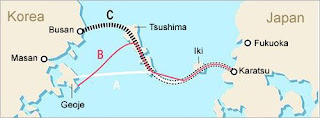


For many Koreans though, the thought of such a connection invokes memories and emotions of a dark and violent past under Japanese colonial rule and under no circumstances would I ever suggest that those feelings are not justified. They are. This is understandably a very touchy and delicate issue which has clearly been reflected in its 30 years of rocky debate. I don't think comments like this are justified.

"...project's opponents say Korea would gain nothing from a tunnel, and it would only end up helping Japan advance into the continent. Choi Yeol, a professor of urban engineering at Pusan National University, said, "An undersea tunnel would add a Japan-size sphere of influence to the southeastern region of Korea. But Japan could extend its sphere to the Eurasian continent. That means the two countries would have disproportionate spheres of influence."
I do think, however, that bridging the two nations would not only set a course towards a more trustful relationship between the old foes, but would also diversify South Korea’s economy, ease trade costs, tourist industry and improve its image around the world.

Some say the project carries a 200 trillion won price tag and, considering the state of the economy right now, even discussing such plans smacks of irresponsibility. Others point out the absurdity of building an undersea tunnel in a hotbed of seismic activity is enough to scrap the entire plan. Both of those points are valid and will need to be addressed, but if the project is deemed feasible and safe, the benefits severely outweigh the drawbacks.

South Korea has tried tirelessly to push their current “Korean Sparkling” tourism campaign. Seoul is getting facelifts and feverishly vying for a larger share of the northeastern Asian tourist industry, but is still seeing very little fruit for their troubles. The industry in essentially centered around Seoul and, for many reasons, is simply not attracting a substantial amount of non-Asian tourists.

As of now, Korea is locked in a battle of trying to prove itself as a world tourist destination which is clearly demonstrated by the slew of sales angles presented in their promotional commercials (here, here and here). The tunnel could potentially provide some direction. If the tunnel is built, Korea will no longer have to focus its resources on introducing Korea to the world’s tourists. Instead, they can appeal to the tourists who are already Korea-bound.

As we know, Japan is a well-established tourist destination and by easing access from Japan to Korea, it unlocks a passageway for tourists in Japan (as well as Japanese citizens) to come to Korea with little hassle. Not only would the headache and cost of air travel be eliminated, the lure of riding on the largest and most modern undersea tunnel would certainly be enticing enough that many tourists would certainly include a few days in Korea on their itinerary. And with the arrival city in Korea being somewhere other than Seoul, more opportunities for Korea to establish itself as a multifaceted tourist destination will be opened. Cities like Busan and Daegu will experience booms as well as smaller “unknown” cities all around the peninsula.

A properly managed influx of tourists is certain to have long-lasting effects on the nation’s image. This is one of the best ways Korea could maximize its exposure. By having a steady flow of tourists from around the world, Korea will have the opportunity to impress upon them just how modern, exciting and even business-friendly Korea has become. Gone will be the days when Korea must make its case as a vacation spot to the rest of world. All corners of the nation will become lively destinations and hotspots and as more people discover all that Korea has to offer, the government will finally start spreading its resources more evenly among its cities. Universities will open or move campuses, business would relocate their headquarters and finally Korea would become a country with more than one city.

The possibilities are endless and the advantages that Korea will receive from such a project would create positive ripples that none of us can fully predict. The battle ahead is still long and there will be a lot of political mudslinging and banter along the way, but I sincerely believe that Korea and Japan will come to an agreement, and that that will be a victory for this nation.

To be continued...

Thursday, February 26, 2009

Grandpa's Libido

That's right. Granpdas need love to and Jongmyo Park in downtown Seoul is the best place where you can witness old men trying to flirt.

The park has been considered a ``sound'' playground for retired senior citizens, but it has recently become a hotbed of the illicit sex trade between sex-hungry old men and prostitutes.

But who would sleep with such old men?
``They are prostitutes,'' said a cobbler working in front of the park. ``The number reaches its highest around 3 p.m. Among them are ethnic Koreans from China
I like how they said "among them". Does that mean "among" all the Korean hookers? Nice omission, Korean media.

You can hear Confucian-style cats calls like "I'm older than you!" or "Because I said so" resounding from the buildings around the park. And not only is this a haven for these aging sex-addicts, but they can also score drugs there as well.
A public restroom in the park was already bombarded with fliers promoting sex-related medicine. ``Cure-all for those suffering declining energy!'' a flier read.

Illegal drug sellers frequent the path encircling the park. A seller attracted customers, displaying the prescription-required erectile dysfunction medicine Viagra
What's the difference between a "seller" and a "dealer" you ask? Blood. Korean's are "sellers" and foreigners are "dealers". The word "dealer" sounds much more depraved and evil whereas "seller" sounds like a child selling lemonade. Regardless, they even offer the old shaman favorites...
Among the traders were those selling dried parts of reptiles including snake. ``I caught and dried these on my own. It's really helpful in boosting metabolism,'' one seller said, but refused to say what kinds of side effects it might cause.
They also had dried skink and anole.

Then the article turned its attention to "sex cruisers". In the United States, people tend to "cruise" at rest-stops, bathrooms and, yep, public parks. Of course, most of these cruisers tend to be gay, but since there are no gay people in Korea (except for this guy and these guys), old-men step up to the plate.

And it closes with...
``Sexual desire is a desire not only shared among young people but also old people. But our society is sill stuck in the obsolete Confucian-based perception that labels desire as an undesirable state, playing a major hurdle in setting a sound sexual culture for the aged,'' said Prof. Lim Choon-sik at Hannam University's social welfare department
So desire is the problem? I guess that's why there are love motels, "massage" parlors and call-girl fliers on every corner. There's just no "desire".

Monday, February 23, 2009

Flush and Toss in the Korea Times

Another week, another Korea Times opinion article...

It's about the Flush and Toss method that I wrote about here.

Friday, February 20, 2009

Flush or Toss: Korea’s Challenge with Toilet Paper

It only takes a few weeks to realize that Koreans are very proud of the rapid development their nation underwent soon after the Korean War finally subsided. While walking around Seoul, it’s sometimes hard to imagine the carnage and violence that once engulfed the now bustling megalopolis. Each decade of the past sixty years has ushered in new waves of social, structural and technological modernity and Seoul, the city that I have now called home for three years, is undoubtedly destined to reach a newer and “greener” pinnacle in the near future. Current economic woes aside, there is nothing impeding further and grander development. That is, except for one thing.

This one thing is the only obstacle that must be overcome before any more apartments can be built, canals constructed or sidewalks repaired: Korean’s have got to stop putting soiled toilet paper in the trashcan. You see it everywhere. You could be in the finest restaurant in the ritziest part of town eating the most expensive Beluga caviar with a pearl spoon, but once you close that stall door behind you, the fine food, drinks and atmosphere quickly fade as you are faced with a bin full of filthy, used toilet paper. It immediately transforms an enjoyable dining (and bathroom) experience into one that is either rushed or outright unhealthy.

Like so many aging generations around the world, older Koreans have many “when I was your age” moments which are usually followed by a lighthearted chuckle or possibly, a sheepish smile. But if Korean bathrooms are the topic, this classic and usually playful expression is not fitting. Korean’s of all ages join in on the wipe and toss method without giving it a second thought. Why would they question it? That’s what their parents and grandparents did. That’s what they see in the bathrooms in schools, malls and public buildings. Those who use the wipe and toss method might not see anything particularly unclean about it. To others, however, there is.

Don’t get me wrong, I’m usually one of the first to stick up for the quirks of this nation, but sometimes the strength (or weakness) of my stomach overrides my loyalties. I’m surprised this practice didn’t disappear long ago and I honestly can’t think of a single plausible reason as to why the wipe and toss method is STILL used. Sure, Korea developed at a breakneck pace and there could be a few cultural hold-overs, but that isn’t an excuse. That pace allowed for contemporary infrastructure to develop. It allowed for the modernization of nearly every public work and plumbing was not left behind. In fact, Seoul is a member of the World Plumbing Council and even hosted the newly elected executive board which and I quote, “has worked closely together for the past six years on matters pertaining to education and training and the role plumbing plays in protecting the health and safety of people all over the world”.

From what I can gather, phase one is complete. Seoul has overcome most of their structural issues regarding plumbing. I’m not going to deny that thousands of buildings and homes scattered around the city might not be equipped with modern plumbing that can handle heavy loads, but it seems like that’s becoming less and less of an issue. The solution lies in the crumbled (or folded) tissue-filled hands of our gracious Korean hosts.

A few days ago in class, I was discussing the complexities of rapid modernization in Korea and the difficulties that some facets of Korean society experienced during that transformation. The conversation ventured into the world of tangible versus non-tangible culture and I asked if anyone (perhaps begging for the discussion) could think of any habits that existed today which seem “old-fashioned”. Low and behold, a brave student called the wipe and toss method into question. I immediately prodded the class in hopes of discovering who --if anybody-- used this method. Out of nineteen students, not one of them raised their hands. Either none of them were guilty or they realized that it’s a bit unsanitary.

The advances that this nation has made in the past sixty years are something that no one can deny. I have witnessed Korea change a lot in the short time in which I have been here and I am always thrilled to be a cheerleader when I see it worthy, but the wipe and toss has simply got to go. That, my friends, is the one of the few snags left that Korea has yet to tackle. And judging by their record, I’d only give it a few years until they overcome that as well. The next step is stocking the bathrooms with enough toilet paper that will last more than two hours.

Monday, February 16, 2009

Korea Times Publishing

I wasn't informed by email (again), but Korea Times published my piece on the cycle of friends in Korea. Here's the link to the paper and here's the link to the post.