Friday, September 15, 2006

Roy Moo-Hyun in Washington

I'll be interested to hear how this goes.


Heart and Seoul in Washington
By Donald Kirk

WASHINGTON - US President George W Bush hosts South Korean President Roh Moo-hyun at the White House on Thursday in a summit that's likely to be the most difficult and potentially most tendentious meeting ever held between the leaders of the two countries. The two presidents are so far apart on the most basic issues that no amount of diplomatic double-talk appears likely to paper over the chasm. So deep are the differences that South Korean officials are saying the two sides have agreed that no joint communique will emerge from the meeting.

Somehow their aides and advisers may devise a waffling statement to which both of them can subscribe, but both sides agree it would be a miracle if they came to real terms on how to deal with North Korea or on breaking down trade barriers that are holding up talks on a free-trade agreement (FTA).

It's hard to say which of these two areas of discussion is more controversial. The topic of North Korea grabs the headlines while that country's leader, Kim Jong-il, wields the threat of an underground nuclear test that would proclaim it a full-fledged nuclear power, but US efforts to penetrate South Korea's largely closed agricultural markets arouse much greater concern to well-organized South Korean farmers.

The US and South Korea, moreover, are at odds on the basic future of their alliance. The United States has persuaded South Korea to go along with a grand design for scaling down the number of US troops while building a huge new base 80 kilometers south of Seoul. The base would accommodate the US military headquarters, now in the center of the capital, as well as the last US combat troops.

The plan confronts South Koreans with the question of whether their country is really prepared to face the North militarily. Southern officials blame what they see as the hardline policy of the United States for the failure to persuade the North to return to six-party talks on its nuclear weapons. This policy, they believe, is responsible for raising the risk of a second Korean War.

The solution, in the official South Korean view, would be for the US to talk directly with North Korea rather than insist that it return to six-party talks as a prerequisite for any form of dialogue. South Korea's unification minister, Lee Jeong-seok, advanced this view in a 50-minute meeting on Monday with Christopher Hill, the US assistant secretary of state for East Asia and the Pacific, when Hill touched down in Seoul on the final leg of a trip in which he also stopped off in Tokyo and Beijing.

Lee's call for "no restrictions on the form of dialogue" reflects the overriding desire of President Roh to pursue reconciliation with Pyongyang regardless of the threat posed by North Korean nuclear warheads or missiles that may some day be capable of carrying them to targets as far as the US west coast. Roh is sure to try to press the case for reconciliation in Thursday's summit, while Bush holds fast to the need for resuming six-party talks. The question is how the two will manage to appear to uphold the US-Korean alliance while Roh calls for what Bush sees as a dangerous form of appeasement.

Roh may also try to convince Bush on what he sees as the folly of the US drive for stiffening economic measures against North Korea if it continues to refuse to return to six-party talks. Hill raised this possibility at every stop on his trip, calling for "vigilance" in enforcing the United Nations Security Council resolution, adopted after North Korea test-fired seven missiles in early July, banning any dealings with the country that might provide technology or funding for missiles or weapons of mass destruction.

Presumably the advisers to both Roh and Bush are so highly attuned to the differences between them that they have scripted a summit in which the two presidents manage to talk politely. Otherwise, the summit could break down in open disagreement, further jeopardizing an alliance that already is clearly frayed. Somehow the two presidents must also find the words to promote a free-trade agreement that both governments profess to favor. Negotiations with Seoul on an FTA appear to US officials as just about as difficult as efforts at bringing Pyongyang back to six-party talks.

While Hill was getting nowhere in his talks with South Korean officials, Wendy Cutler, assistant US special trade representative, leading the US side in the FTA negotiations, concluded what she said was a "disappointing" third round of talks with the South Koreans in Seattle. Basically, the Koreans refused to agree to open up agricultural markets, knowing full well that significant concessions would provoke a renewal of violent protests by rice farmers fearful of losing their livelihoods to US competition.

There's no way Roh and Bush can avoid this issue. They may, however, gloss over it, talking up the benefits of free trade while ignoring the controversy. They may also come up with an implicit tradeoff - US concessions to South Korea in return for a show of South Korean support for the alliance.

US and South Korean scriptwriters may also hope to find common ground even on the topic of North Korea. The formula would be a new version of multilateralism. Hill, in Seoul, suggested that approach in a call for a multilateral forum - a "mechanism", as he called it in an exercise in voodoo diplomacy - that might function without North Korea. Roh, at the meeting of Asian and European leaders in Helsinki, called for a multilateral security framework in Northeast Asia. Diplomatic wordsmiths may manage to merge these pleas into a formulation reflecting both concepts.

Roh and Bush may also find common ground on the topic of North Korean nukes, deploring the development of North Korean nuclear warheads and calling on Pyongyang not to upset everyone by an underground test. A vaguely worded statement on that topic could get around the whole question of how to respond to a test. Bush may well see a test as a reason not just to strengthen economic sanctions but to build up defenses in the region, notably in Japan. Roh has already suggested he does not believe a test would be all that important - certainly no reason for giving up the quest for North-South reconciliation.

Roh may, however, be up for a clarion call against escalation of tensions as seen in North Korea's nuclear weapons program. Such a statement would mollify the US while also appeasing another constituency of which he is acutely aware, his own conservative opposition, angling to take over in South Korea's next presidential election at the end of next year.

For Bush and Roh, the challenge is to give an appearance of continuity and a common approach. Ideally, the final script for the summit will be a bland concoction of diplo-speak. But will they be able to stick to the script? The great challenge is for both sides to avoid any sign of acrimony while neither backs down from previously known views.

Journalist Donald Kirk has been covering Korea - and the confrontation of forces in Northeast Asia - for more than 30 years.

Thursday, September 14, 2006

How it all began...

I know I haven't been writing much about my experiences recently, but in all honesty nothing big has been happening and I'm becoming increasingly interested in Korean history, philosophy and politics. I do have a few posts to write, but I'm trying to gather all the information I need before I can present it to you. I got the idea for this post the other day when I was talking to Aaron about Korean mythology.

Like a lot of Asiatic cultures, Korea has their share of myths and they usually involve animals and nature. Remember, Korea has a rich religious history, although over half of the population alive now claims to be secular. The original religion of Korea was a form of the Eurasian shamanism and the totemism of Far East Asia, specifically of the nomadic peoples of present-day Manchuria. These were strongly influenced by the later importations of Buddhism, Confucianism and Taoism from China. I'll talk about religion in Korea after I visit some temples and familiarize myself with what's written and what's practiced. I mention past religion in order to give a background to the myth I'm about to explain to you. Harmony with the world is always paramount with Asian religion, so using flora and fauna in a myth only makes sense.

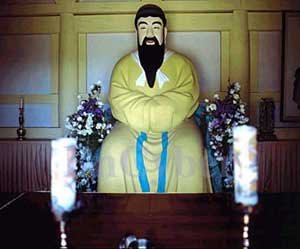
This is the creation of the Corean. (The "C" was changed to "K" during the Japanese occupation from 1910-1945. Japan did this so Corea would not be presented before Japan was during the opening ceremonies of the Olympics. You'll see the Corean spelling a lot here, but there is no push to change it back.) Buried deep in the subconscious memory of descendants of Asiatic tribes that moved into southern Manchurua and the Korean Peninsula lies the myth of Tan'gun. Hwanin, the heavenly king, had a son, Hwanung, who wished to live on earth among men. Accompanied by 3,000 followers, Hwanung descended from heaven and appeared under a sandalwood tree on Myohyong-san (san is mountain) in North Korea. He ruled over the people that he found there, teaching them agriculture, arts and social behavior. Here he is...


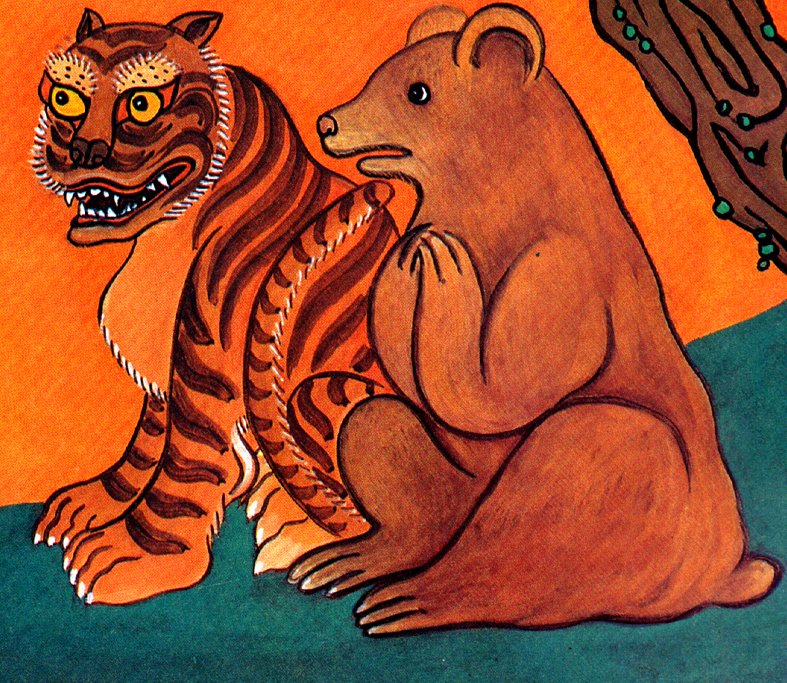
There was a bear and tiger in this land who wished to become human. They prayed to Hwanung to fulfill their wish, and he looked favorable upon them. Giving each 20 or so cloves of garlic and a bunch of mugwort, he told them to take only that nourishment and to stay out of the sun for 100 days. They retired to a cave and took the food. Because of growing impatience and hunger, the tiger left the cave. The bear, however, endured and was turned into a woman. (Note the feminine characteristics of the bear compared with the masculine traits of the tiger.)


Happy with the fulfillment of her wish, she prayed under the sandalwood tree to become a mother. Hwanung gladly obliged, and the bear-woman bore Tan'gun, The sandalwood King. Tan'gun became the first human king of the people of the peninsula, establishing his capital at Wanggom (current day Pyongyang) in 2333 B.C. and calling his kingdom Choson meaning morning calm or morning freshness. That is the literal meaning of "Korea" as well.

Of course, no one really believes this myth anymore, but it's still used to foster Korean nationalism. Koreans, like Americans, also have a "Manifest Destiny" chip on their shoulder, but I'll discuss that later on as well. They believe that there is a Korean race. This "race" is apparently the purest in the world and there are even Korean biologists, anthropologists and other scientists who claim the same. Naturally, this is not true, but they DO believe themselves to be of a pure or divine race. Classic.

To that I say, if they're so pure and divine, then why does a tremendously large percentage of the population get plastic surgery? I tell you next time...

Monday, September 11, 2006

Interesting article...

Here's another great article I found. This subject is a complicted one that has very serious implications. East Asian stability is at question in the years to come and I'm going to try to stay at the forefront of the matter while I'm here and hopefully later in life. It's funny how easy it is to discover such a modern day problem that effects millions, yet unless you look for it, you very easily could never know about it. This is why we need to read newspapers my friends.


South Korea must choose sides
By Corey Richardson

Rumors of a substantial drawdown or complete withdrawal of US Forces Korea (USFK) have been around for decades. After years of a South Korean administration generally hostile to US regional objectives and priorities, perhaps the rumors are finally becoming a reality. That would be a tragedy for both sides.

If the US were to leave Korea, how would US influence in the region be altered? How would Korea's relationships with China and Japan change? What about the strengthening US-Japan alliance? What if North Korea collapsed? These questions have largely escaped critical consideration in the current debate.

Despite President Roh Moo-hyun's stunning obliviousness to political and security realities, South Korea would be particularly vulnerable without USFK, or even with a token force left in place. For its part, the US cannot realistically expect to maintain or improve its ability to exert regional influence by leaving Korea.

Like US Forces Japan (USFJ), America's Korean contingent helps prevent conflict by acting as a strong deterrent for any nation that might consider military actions or threats, at the same time moderating the responses of the host nation in tense situations. Obviously, the original purpose of the US-South Korea alliance was to counter the North Korean threat. However, as that threat has waned, a more important, diplomatically incorrect mission has evolved in addition to deterring North Korea: ensuring stability among China, Japan and Korea.

The North Korean threat is nonetheless the reason for the majority of South Korea's defenses, even if Seoul won't say so in defense white papers. No conventional military calculus suggests the possibility of a North Korean victory in a second Korean War, but a weaker South Korean military could cause Pyongyang to miscalculate. South Korea's defenses must remain strong.

Regional tensions, but stability

Even with USFK in Korea, issues from the region's long and often confrontational history cause tensions to flare. Chinese claims that Koguryo, an ancient ethnically Korean kingdom whose territories extended into present-day China, was in fact a Chinese kingdom have raised Korean hackles on several occasions. The move is viewed as the possible groundwork for justifying a Chinese invasion of the northern half of the peninsula, perhaps to "help" a North Korea on the verge of implosion, or after collapse.

China's plans to register Mount Baekdu (Changbai in Chinese) as a Chinese historical site with the United Nations Educational, Scientific and Cultural Organization (UNESCO) World Geopark list was also viewed as a possible prelude to claiming North Korean territory. The mountain, sacred to both sides, straddles the border. A 1962 agreement between the two countries split ownership of the mountain.

This view is bolstered by the fact that China prefers to retain border buffer zones and would not relish having a reunified Korea, potentially with US forces just across the Yalu River. South Korea could not prevent China from sending troops into North Korea, and the US likely would not risk war with China over North Korea. Japan's colonial domination of Korea from 1910 to 1945 has left a deep and bitter resentment in both Koreas that is apt to provoke emotional and drastic responses.

One high-profile manifestation of this is the decades-long dispute over the ownership of some relatively insignificant islets in the waters between the peninsula and the archipelago, the Liancourt Rocks. Known as Dokdo in Korea and Takeshima in Japan, South Korea has stationed a Coast Guard contingent on the island since 1954 to enforce its claim. Both nations claim the area as a part of their exclusive economic zones (EEZs).

In 2005 South Korea scrambled fighters to intercept a civilian Japanese Cessna aircraft nearing Dokdo airspace. When Japan announced plans to conduct a hydrographic survey of the area, South Korea made vague threats alluding to possible military action against the research vessels. Japan backed down.

Japanese Prime Minister Junichiro Koizumi's numerous visits to the Yasukuni Shrine, dedicated to Japan's war dead including some convicted war criminals, have raised diplomatic tensions with both South Korea and China on several occasions, including a temporary recall of South Korea's ambassador in Japan.

Ripe for an arms race

South Korea wants to be the "hub" of something in East Asia, and it may finally have its chance, thanks to the Roh administration. The current US-South Korea situation is a case of "be careful of what you ask for because you might get it". Even so, the psychological impact on South Korea of a significant USFK departure likely would not be immediate but should not be underestimated. A massive reduction of US troop levels and capabilities could have the same effect as a complete withdrawal on Seoul's planning processes. It might begin with regretful concern, but could quickly become panic.

At this point it should be noted that even if the USFK withdraws from Korea, some sort of collaborative security agreement will remain in place. However, South Korea's perception of America's commitment to security on the peninsula is the decisive factor in how it will react to real and perceived threats. What are now relatively minor disagreements with Japan and China would take on a more serious dimension.

Without USFK, South Korea would need to vastly increase its defense budget to make up for functions long taken for granted. With American forces on its soil as a safety net, South Korea didn't have to be overly concerned with being attacked or invaded. Many Koreans would perceive that era over. Another factor is the closer US-Japan security partnership, which causes both China and South Korea concern. Some in the South Korean defense sector are undoubtedly jealous of the relationship Japan enjoys with the US. Japan would also need to take into consideration a South Korea without the moderating influence of USFK, although the role of USFJ in Japan would reduce much concern.

In such an environment it's not unthinkable that a few minor skirmishes could occur, between South Korean and Japanese navel vessels in the vicinity of Dokdo, for example. This would be the slow start of a regional arms race, with Korea and Japan joining China's ongoing buildup.

A reunified Korea could go nuclear

North Korea is the wildcard. If in the next few years reunification were to occur - through a North Korean collapse, the death of Kim Jong-il, or a possible but unlikely mutual agreement - South Korea would suddenly find itself straddled with the enormous cost of integrating North Korea. These costs would dwarf the already massive increase South Korea would have been undertaking in defense spending, something it would clearly be unprepared and unable to accomplish while maintaining its defense investment. A Korea faced with an economic dilemma of such magnitude would find maintaining its conventional military forces at current levels impossible. At the same time, it would feel more vulnerable than ever, even with US security assurances.

For a nation paranoid about the possibility of outside influence or military intervention, strapped for cash, and obsessed about its position in the international hierarchy, the obvious route might be to either incorporate North Korean nuclear devices (if they actually exist), or build their own, something South Korean technicians could easily accomplish. North Korea, after all, has set the example for economically challenged nations looking for the ultimate in deterrence.

One might argue that clear and firm US security guarantees for a reunified Korea would be able to dissuade any government from choosing the nuclear option. If making decisions based purely on logic the answer would be probably yes. Unfortunately, the recent Korean leadership has established a record of being motivated more by emotional and nationalistic factors than logical or realistic ones. Antics over Dokdo and the Yasukuni Shrine and alienating the US serve as examples. But the continuation of the "Sunshine Policy" tops those.

Instead of admitting they've been sold a dead horse, the Roh administration continued riding the rotting and bloated beast known as the Sunshine Policy, until all that are left today are a pile of bones, a bit of dried skin, and a few tufts of dirty hair. Roh, however, is still in the saddle, if not as firmly after North Korea's recent missile tests.

Japan must then consider its options in countering an openly nuclear, reunified Korea without USFK. Already building momentum to change its constitution to clarify its military, it's not inconceivable that Japan would ultimately consider going nuclear to deter Korea. As in South Korea, there is no technological barrier preventing Japan from building nuclear weapons.

While the details of the race and escalation of tensions can vary in any number of ways and are not inevitable, that an arms race would occur is probable. Only the perception of threat and vulnerability need be present for this to occur. East Asia could become a nuclear powder keg ready to explode over something as childish as the Dokdo/Takeshima dispute between Korea and Japan, a Diaoyu/Senkakus dispute between China and Japan, or the Koguryo dispute between Korea and China.

The arms race need not occur

One could argue that the US would be able to step in and moderate things before such an escalation could occur. Considering the recent US record on influencing either North or South Korea, it is perhaps unwise to count on it being able to do so at some crucial point in the future. One could also argue that the US need not be involved in a future East Asian war. Like assuming there is no need for USFK since North Korea is considered less of a threat to Seoul, that is wishful thinking. The US has too many political and diplomatic ties, aside from alliance obligations, to ignore such a war. For American policymakers, the notion that a withdrawal is a deserved payback for the rampant anti-Americanism in South Korea, or that the few billion we spend on defense there is a catastrophic waste, need to be discarded. The potential cost of a war would be far greater in both American lives and in dollars, the benefits of continued peace immeasurable.

Vastly reducing or withdrawing USFK can only harm US security, it cannot help it. USFK has helped maintain peace and allowed the US to project influence in the region for the past six decades; removing that presence would be foolish and difficult to replicate once done. It is also important to keep in mind that the next presidential election will likely result in a less anti-American administration.

South Korean policymakers and citizens alike need to come to terms with the fact that Korea will probably never be a powerful nation, but because of its location it will always be important in the geopolitical sense. Because of this, Korea can never take the middle ground or play a "balancing" role; Korea must choose sides.

Finally, the reality that both American and South Korean policymakers need to come to terms with is that USFK deterring a second North Korean invasion has become a secondary mission to maintaining regional stability, even in a reunified Korea.

Corey Richardson is a Washington-based analyst who covered East Asian security issues as a presidential management fellow with the US Department of Defense, and is a co-founder of The Korea Liberator (korealiberator.org), a weblog focused on North Korea. The opinions expressed are his own. He can be reached at richardson@korealiberator.org.

Sunday, September 10, 2006

Simply the Best (or worst)

South Korea, like most countries, has its good points and its bad points. So thought I'd try a new kind of post. I've done a little research and come up with a fun and somewhat interesting list that I think highlights South Korea. We'll start with census facts from The UN.

Rankings
#1 Seoul population: 10, 765, 000 people (Sao Paulo is #2)


#7 Gas prices: 1.655 USD/liter (Great Britian is #1)

#81 Life expectancy: 59 for men, 64 for women (Japan is #1, Bahrain beat Korea...ouch!)

#13 Korean language is spoken by 75 million people (Chinese is #1, followed by English)

#39 Freedom of Press (Finland and Iceland are #1, US is #17)

#4 4.04 % in increased productivity from 2002 to 2004 (Poland is #1, US is #7)

#11 Budget expenditures in 2005 with 189,000,000,000 USD (US is #1)

#20 Account balances with 14,320,000,000 USD (#1 is Japan and US is in dead last)

#25 Debt with 188,400,000,000 USD (US is #1 with 8,837,000,000,000)

#18 Ecomomic aid donor with 423,000,000 (Japan is #1, UK is #2 and US is #3)

#13 Electricity consumption (US is #1)

#11 GDP with 1,021,000,000 USD (The EU is #1, US is #2)

#43 GDP per capita with 21,000 (Bermuda is #1, US is #5)

#26 Natural gas consumption (US is #1)

#10 Oil consumption (US is #1)

#62 Population below poverty line (Zambia is #1, US is #64)

#104 Unemployment rate (Liberia is #1, US is #91)

So, all that tells about is the "state" of Korea, but it doesn't tell much about the people and their abilities. Maybe this list will help.

#2 Math skills (#1 is Finland, US is #24) CBS NEWS http://www.cbsnews.com/stories/2004/12/06/world/main659331.shtml

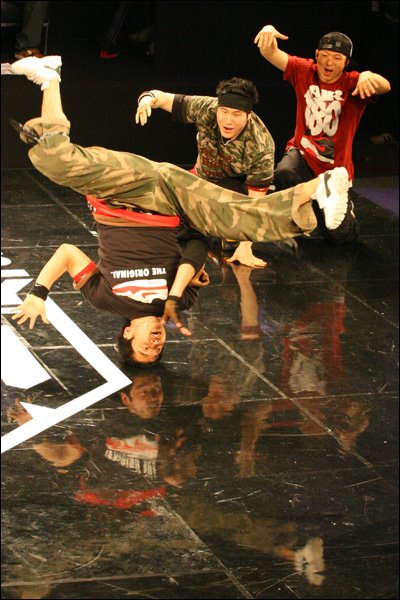
#1 International Breakdancing Championship http://english.ohmynews.com/articleview/article_view.asp?menu=c10400&no=283830&rel_no=1


#52 FIFA (soccer) rankings (Brazil is #1, US is #23)


#21 International Men's Basketball

#8 International Women's Basketball

#1 ESL teachers


There are over 14,000 ESL teachers in South Korea and over 10,000 of those are in Seoul. I'm glad the Bengals, Reds and Vols all won their weekend games. It looks like the Bengals were on top of it, although Palmer was a bit shy. Ainge is on fire, but needs to keep it together. The Reds have a lot of work to do if they want to fight back up to that Wild Card position. I can't wait to go see them all next year. I hope you enjoyed all the stats. I found them interesting at least...

Update: I have started taking Judo and I'll fill you in as I find out whether it's for me. Besides that, I'm busy working, writing and planning my Cambodian trip. Fun times!!!

I'm glad I'm not stylish...in Korea.

Wherever you go in the world, you're going to see people and music which reflect that specific culture. So I want to tell you about the things that I have overlooked while I've been here. I want to start with fashion. A few weeks ago we went to the market. I did not need any clothes since I have not been here long, but Mike, Joel and Dave needed some stuff and I'm always up for something.


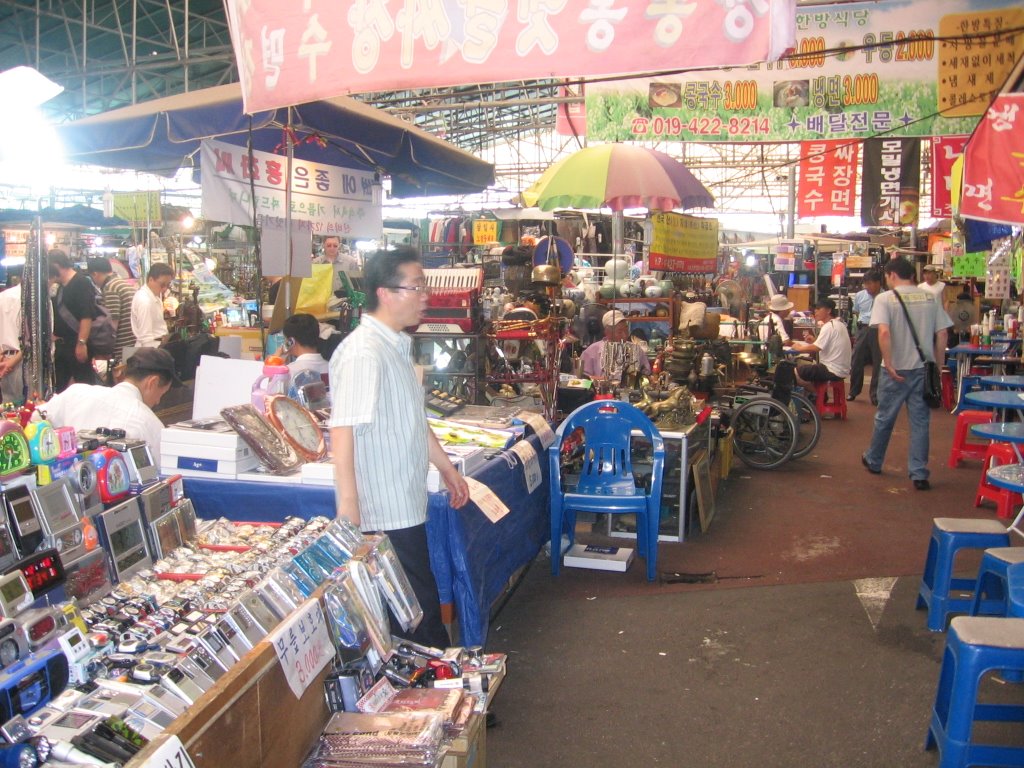
As you can tell, it's not the kind of place where you could get nice clothing. They had a lot of used clothes, old electronics and some really creepy pornography. We could not find anything that we wanted, so we decided to sit and get a bite to eat. It was there that we ate some gross quail and some pretty odd pig's head. (You eat the skin off the face.) After that "wonderful" meal Dave, Mike and Joel still needed some new clothes and were not ready to give up yet, so we decided to walk to the mall. I hate malls so much. In fact, the last time I was in a mall was with Uncle John in Cincinnati when he was looking for a phone charger. I even commented that I hoped I wouldn't be in a mall for a year. I don't think he likes them either. So we walked down the road. The area we were in in called Dangdae-mun. It is a huge market district. Major markets, like Namdae-mun and Dangdae-mun, provide another place for Korean food as well -some of which I had never seen or heard of before. I had trouble identifying much of it.

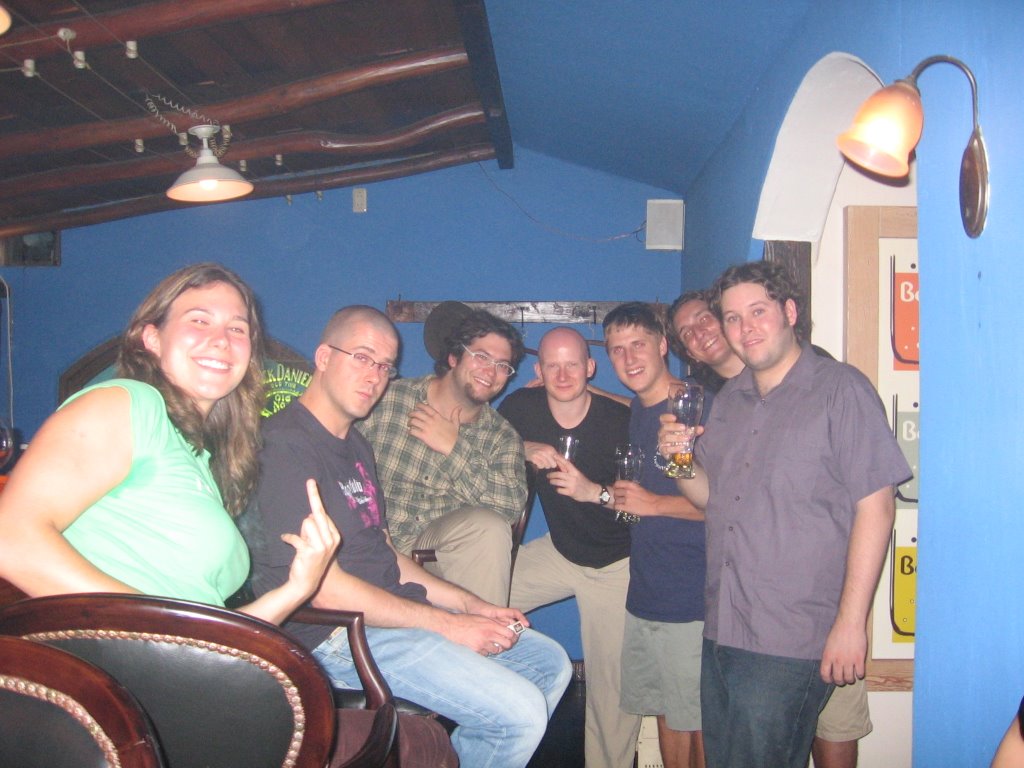
I have never been stylish and neither have my friends. We're happy dressing the same way we have since middle-school: khakis, solid polo's and that's about it. Sure, I wear tye-dye's, shorts and sandals from time to time, but that's not stylish by any means. I know we didn't live in a big city, but still. This is a picture of us during Spring of 2004.


Both South Korea and Japan are somewhat of a beacon of fashion in Asia. From what I've read, the Chinese youth and older frantically try to keep up with South Korean fashion. They buy posters and shop at South Korean stores in China in hopes of looking as "cool" as the people here. I do not think they look very "cool" here, but I'm not into fashion or Korean, so what do I know. There are tons of models here from all over the world (especially Russia) and there is not a huge difference between the fashion you see models sporting and what the people wear. The college-aged and twenty-somethings are the ones who are typically setting or following the trends very closely. The Japanese and Koreans dress very similarly and both countries seem to share fashion ideas and styles. Just like at home, pop stars influence styles heavily and start all sorts of awful fashions.


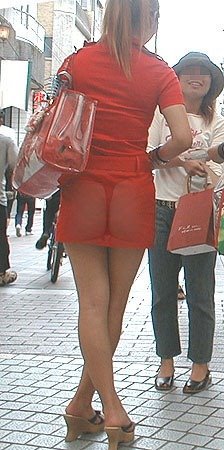
This is a trend that is slowly moving its way to Korea. I have not seen it yet, but it is apparently real big in Japan and seems to be doing well here. I think Japan might put up with a lot more than here. I assume the women would not be able to dress like this if they still lived at home. Personally, I don't mind it too much, but I wouldn't really want to see my wife or daughter in the outfit.


This is a pretty typical sight in Japan, but it's all over the place here. If you want me to pick up anything you see on this post, just let me know and I'll put it in the mail.


I put these two pictures next to each other to show that all the fashion is not odd. The girls on the left reflect a more typical Korean fashion, but the two on the right are right up there. If you are married, you will probably dress more like the ladies on the left. Age is a factor as well.


So we left the market (which was located in an old baseball stadium) and walked to the mall. We passed people selling everything imaginable. Piles of clothes, shoes, sunglasses, wallets and hats were on both sides of us. We stopped at one place to check out the shirts. In the middle of the piles was man selling the clothes. He was shouting like he was an auctioneer. The clothes were all awful though. So we arrived at the mall and it was so different from those at home. Instead of individual stores, there were just salespeople standing in front of their small display that might have two manikins (sp?). The clothes had pockets all over them, big letters and usually had English written on them. Of course, the English didn't make any sense. It would say things like, "I'm off to island, so bad you?" and "Don't talk to me if you're hungry." I'm serious, those are two that I can remember. It seems like they could find someone to proof-read them before they go out. So the guys and girls have interesting fashion and it's not like home where there's a lot of variation, in most cases they all dress the same.

I will not buy the clothing here. It's just not me. Besides, would you really want to see me in some of those outfits?

I know that this wasn't the most interesting post, but I figured you guys should get to see what I have to see everyday. Also, I'm trying to set up the blog so I can post videos on here. I'm in the process of doing it, so be patient. When I get that set up, I will address the music, or as it's called here, K-Pop.

Honestly, I do know anything about fashion, so who knows what's trendy...

The Dreaded Anniversary

Even in Korea I can't escape it. CNN can't stop talking about it. The papers keep reliving it. ABC is distorting history with "The Path to 9/11". And now I hear that Bush will be making a 20 minute dribble during the already dangerously partisan film. Could this get any worse? Yes, but only if I had to watch the made for TV movie. When is it going to be enough? How many more times do we have go over and over that grim day? It happened, it was horrible, but do we have to think about it everyday? Is it benefitting the people at all? No, it's not. It assists those in charge. Scared people are easier to manipulate. I saw a poll yesterday that said in 2002, 48% of those polled felt "fear" when they thought of 9/11. Here were in 2006 and 70% of those polled felt that "fear". Why? Maybe this image will help.


Through war, calculated deception, intentional over-reporting and pop culture, our own leaders in both Washington and the TV news media (which is so conservative it makes me sick) have managed to scare us into living in the mold they created for us. I know we're close to the mid-term elections, but could we ever discuss some real issues? How about what has been done since then? Perhaps we could even think about new ways to approach this problem. Nope, they want to tell the story over and over again and everytime they do this it will change. It will be distorted and then a little bit of history is forever gone. The truth was probably distorted from the start, so now they're distorting distortions. How can we let this happen? It's like they have no sense of right and wrong. Exploiting tragedy for personal gain is disgusting. As I said after the 2004 election, "What Morals?".

I'm not saying anything that hasn't been said before, but I need to vent a little. So do me a favor. Read a book, take a walk, spend time with those you love, play with the dog, do anything, but please do not watch the television on 9/11. Do not listen to the country musicians who make money writing songs about 9/11. Pandering to raw emotions and open wounds for votes is wrong, so let's not let them win...

The image was from talkleft.com

Saturday, September 09, 2006

Picture Pages

Picture Pages was a great show of my childhood. It was a Bill Cosby creation and I remember it fondly. I decided pictures needed to start being included in these posts. It can only help you guys in getting a more accurate idea of what I'm up to and where I'm going. I took some pictures at school the other day, so this post will be all from school. I have already written about the kids, so expect images rather than text. However, in the future the pictures will be mixed in with the stories and observations. This will also be great for when I go backpacking in North Korea (that's right) in October and travel to SE Asia for Christmas break. Christmas in Cambodia!! Enjoy the pictures.


Here I am helping Lucy with her work.


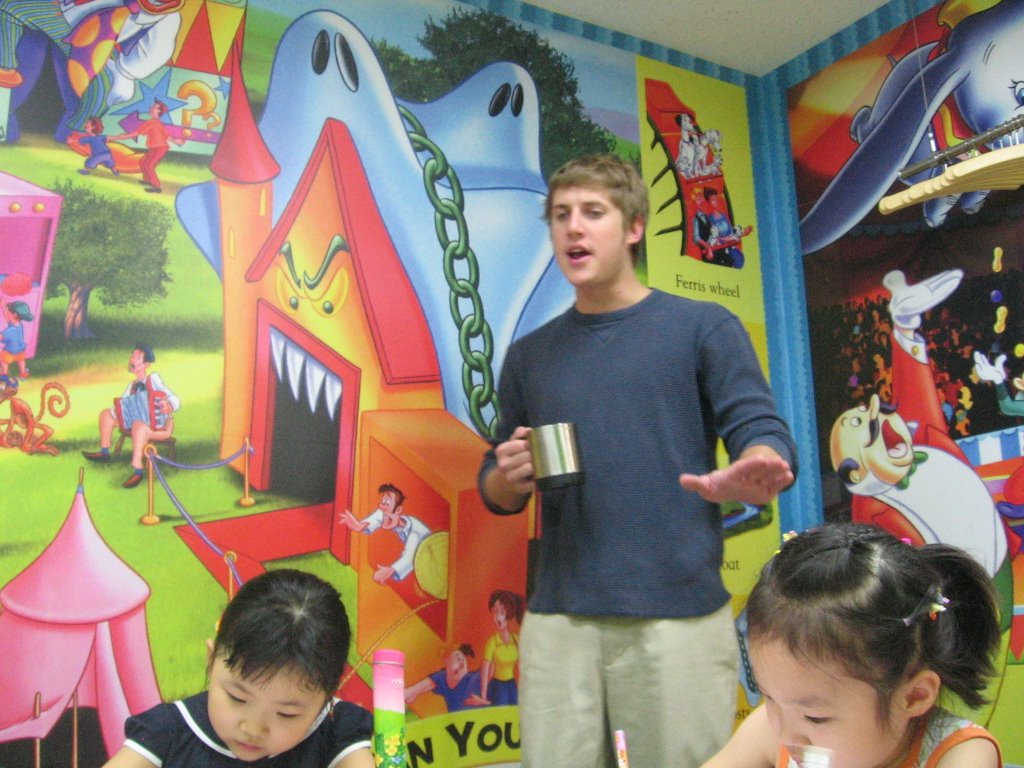
There's an action shot of me teaching my Kindergarten. You like my shirt?


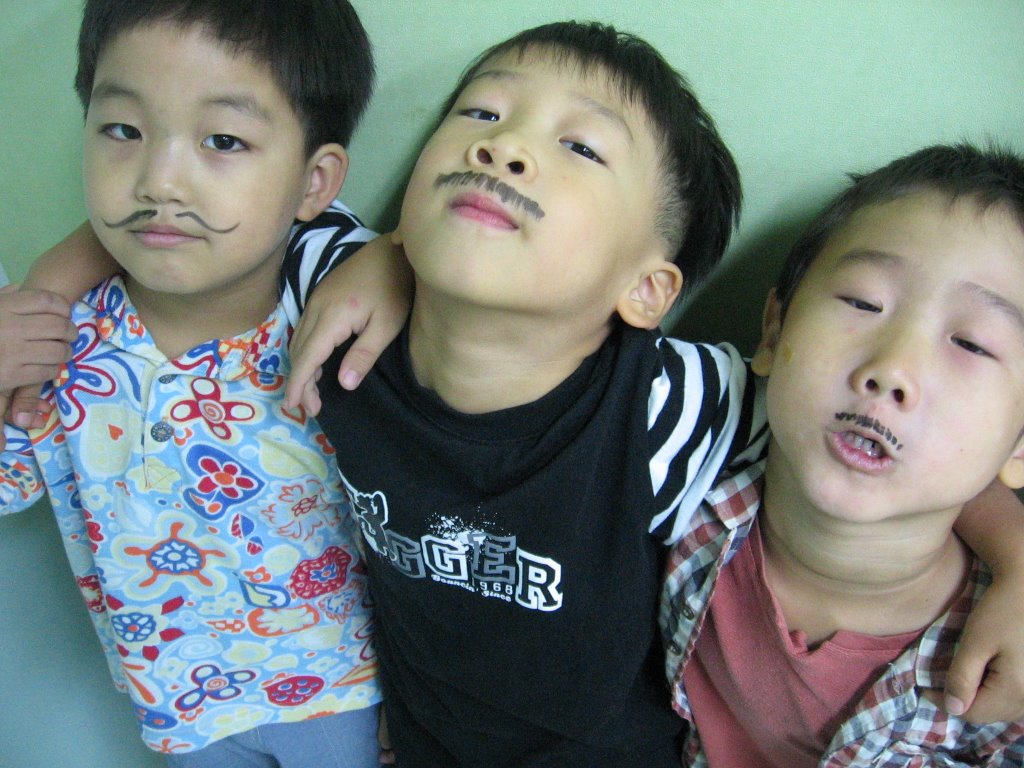
I broke down and gave the boys mustaches. (Left to right: Ji-eung, Victor, Jason)


Alice is very camera shy.


Jeny has recently started speaking in class and now she is quite fun to teach.


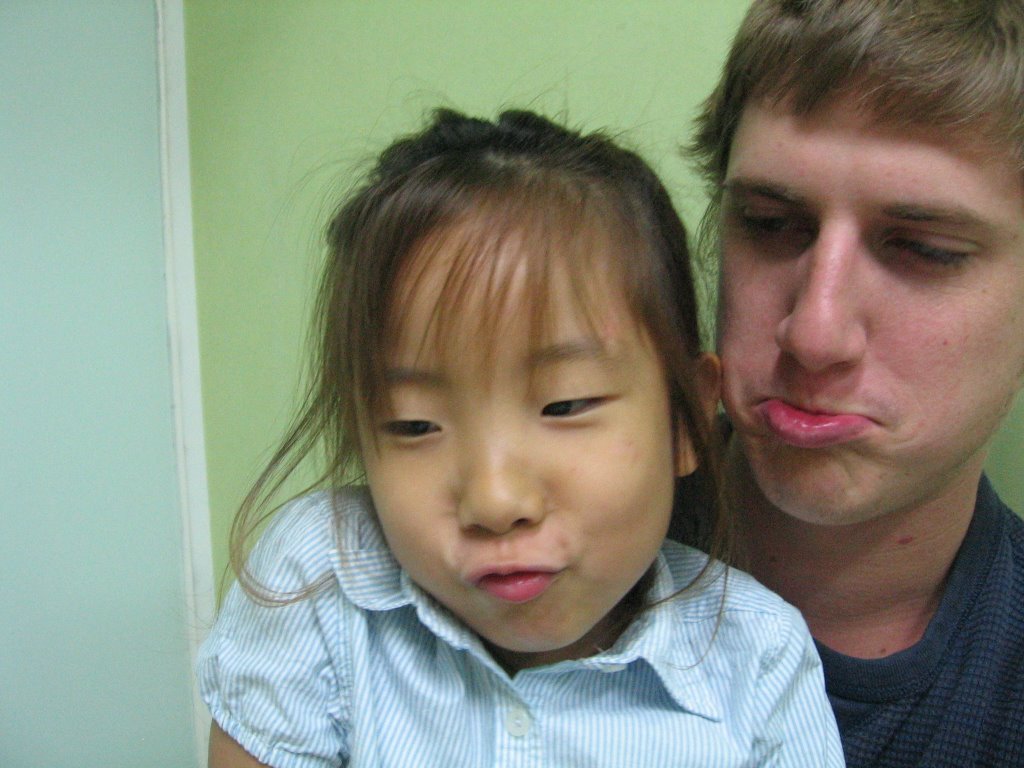
Victor and I posing. He does not have the typical Korean teeth.

There's Lucy!


(Left to right: Jason, Sally, Jessica, Kellie, Alice, Jenny, Jessie, Victor)

This is some of my Raptor class. They are wearing their traditional Korean clothing for
"Manner's Day" at school. They all looked great!


I hope that you enjoy the picture feature. I think it will be great for you guys. Let me know if you have any requests of past things I've discussed or anything else you want to see. You may have noticed that I changed the title of the blog. It's now called "Free My Seoul", rather than "Seoul Searching". I saw that other people had titled their blog under the same title, so I changed. I will be writing a couple posts tomorrow, so keep an eye on it.

Changes...

I'm working on changing the blog today and tomorrow, so I will have some new posts with some new features in the days to come. In the meantime, check out webshots, I put up some new pictures. You probably noticed that I changed the template already, what do you think?

FYI. I just got cable so now I won't be missing any more sporting events this year. GO Vols, Reds and Bengals!!! (Sorry Titans, I sold out when I left TN.)

Wednesday, September 06, 2006

Teacher, so Bush is bad?

"Good afternoon class." I said as I walked into the classroom.

I was excited about the day's lecture. We were reading about Native American storytelling, lore and myths and I couldn't wait to talk to these kids about this wonderful culture. I had over prepared for the class and knew just what I wanted to talk about and what I wanted them to get out of the class. I hoped to talk about the peopling of North America, the Columbus myth, the wonderful history, their demise and their ultimate fate. I was going to use the totem pole as a springboard into it. I walked into the class carrying a globe and a big smile. Is there really anything better than teaching?

So, after prepping the kids and making sure they were familiar with the vocab and names, I started.

"When was America discovered" I asked, just baiting them for the 1492 response.

"1492." One boy answered.

"Really? Okay, what did he find when he got there?"

Of course I know that he did not even find the mainland, but really landed close to The Dominican Republic. I decided not to confuse them with this bit of history.

"He found Indians." They all said.

"So, if he found Indians, did he really discover anything but someone else's home?"

I let them think about it for a minute.

"No, he didn't really discover anything." My brightest student replied.

Before I could go on with the lecture, a girl who lived in Dubai for a few years interupted.

"Is that what George Bush is trying to do in Iraq?"

I laughed. What a classic comment for a nine year old to say. I noticed that some of the kids weren't as savy with their current events, but they all knew who Bush was and they seemed interested. I decided to postpone the planned lecture and see what these kids knew about the current state of the world. After making sure everybody was on the same page, I asked them what they knew or thought about the American President. As I expected, not one of them said anything good about him. How could they? Still, I stayed objective and proceeded to dig deeper. They knew about the war in Iraq and wanted to know why we were there fighting. I started from 9/11 and went from there. They all knew what 9/11 was, although they were unsure who did it. I told them who orchestrated the attacks. They all knew who bin Laden was too. What classic villians to be familiar with. So we talked for awhile about it and I used the globe to assist with the geography.

"The people responsible for the attacks lived here (I pointed to Afghanistan) and we are fighting a war here (I pointed to Iraq)."

"Teacher, why is America fighting in Iraq if the bad guys live in Afghanistan?"

Imagine that, a nine year old Korean saw in seconds the idiocy of fighting in Iraq what the majority of Americans took over three years to understand. I couldn't get into real details with these kids because of their age, but they were really hitting the nail on the head. I know that their anti-Bush sentiment is from their parents, but when they all saw the geographical problem in seconds that was not their parents. That was them. They were confused and could not understand why America would do such a thing.

War in Korea is understood differently. The last was they had was "the war". They can't fathom why people would fight a war that seems like it's based on nothing. I agree. How can we? I didn't stop the Bush bashing, but I did not contribute. Class was coming to an end and I asked them if they had any final thoughts on this topic since we would have to get back to the lecture next class. Grace, the Korean from Dubai, raised her hand.

"Teacher, so Bush is bad?"

The bell rang. I looked at her and smiled. It was unspoken, but I could tell she knew how I felt. She returned the smile and I walked out of classroom just happy to help.

Tuesday, September 05, 2006

What's for lunch? Rice?

Now that I'm in my second year of teaching and have eaten literally thousands of school lunches in my lifetime, I feel that I am a bit of a connoisseur. My nose is well trained to smell even the slightest burning of meat loaf. Last year I used to get excited on pizza Friday's and lament the Hamburger Helper that was served on Wednesday's. Now, there is no schedule, there is no variety and I know the cuisine will always include one ingredient: Rice.

Before I arrived here, I was reading my trusty travel book. It said that rice IS the main course and the rest of it was just "filler". That's true. I have never been a big rice eater. I thought it was bland and I intentionally would stay away from it. Now, I eat it everyday. Luckily I only eat it once a day, whereas the typical Korean will eat it for breakfast, lunch and dinner. That's a lot of rice! So my lunch consists of a whole lot of things I can't pronounce and usually don't eat. Don't get me wrong, I tried them all and decided that they were not for me. The lunch, like last year, is brought to the room by the ajumeoni. That's the word for a middle-aged or old woman. They are the helpers and cooks and janitors and everything else. So it arrives on a tray and usually includes six dishes. Each dish is in a metal container. The biggest one is of course the rice. Then they'll have a very small portion of meat (chicken or fish), Kimchi (spicy cabbage), tofu, soup and a bunch of other odd things. I eat the rice, soup, tofu, Kimchi, and the meats. It's wholesome, it's tasty and, unfortunately, I'll be eating the same thing everyday until next July.

Last year, kids seemed to be a lot pickier with what they would and wouldn't eat. The Korean kids will eat it all with no complaints. They love it and even though they eat the same stuff all the time, they'll usually ask for seconds. I don't know how they do it and all I know is that I would never ask for seconds.

I am grateful for the free meal though. I just hope I don't come home loving rice.

Monday, September 04, 2006

Your questions, comments and thoughts.

I really appreciate you guys reading and commenting on my posts and tonight I will try to answer them all. So if you have commented or asked a question on a previous post, go back and hopefully I will have answered your questions. Thanks...

Sunday, September 03, 2006

What is that damn noise?

If you were to see or imagine a busy city street in Asia, what do you think you would notice the most? Would it be the narrow roads? How about the vertical signs that line the busy sidewalks? Could it be the laundry drying in the hot sun? Maybe it would even be the fashion or the old men drinking all day and night. Sure, all those things are prevelant, but there is one thing that I know you all have thought of and a sight I will never forget: the millions of motorcyles.

When I say motorcycle I mean all motorbikes. There are mopeds, scooters, racing motorcycles, touring motorcycles, and of course, the Harley (I've only seen two Harleys and both were carrying foreigners). They are everywhere. There are three parked outside of my apartment building which houses only seven people. Rhett owns one and we road it yesterday on the way to the Han. I was on the back and I'm not sure how hundreds of people escape from wrecks everyday. They show no regard for their own safety when driving. They weave in and out of traffic. They cut people off and run lights. They disobey every traffic law imaginable, yet no one cares. Why? Why do reasonable people put up with this? Honestly, I do not know. I bothers me that they can do what they want on the roads. Now, I will not be able to write much on this topic as it is still so foreign to me, but I will try to give you guys a clear picture of how crucial the motorcycle is to Seoul.

As I mentioned in a previous post, Seoul has the largest city population in the world. They have managed this only because Seoul is surrounded by mountains and this, I assume, made it geographically impossible to sprawl into areas that would be otherwise deemed "metropolitan". I know I have not put up a lot of city pictures, but perhaps from my Han river pictures you can tell that this city has sprawled not out, but up. They stack apartments right on top of each other and then build them as tall as possible. It doesn't make for the prettiest architecture, but it sure is unique. So, with that in mind, you can imagine how congested the roads are all the time. I think the only time I've seen the roads free of traffic was when I was walking home at about 5am or so after a late night with friends. Other than that, it's bumper to bumper.

The motorcycle can get around the traffic. The motorcycle can drive on the sidewalk. The motorcycle can do whatever the motorcycle wants to do. Typically, it's the motorcycle that delivers food. They are the ones who do anything and everything that needs to be done fast. It's as dangerous as it sounds, but I have not seen a wreck. The seasoned teachers at my school have not seen a wreck. They are skilled and apparently feel comfortable sneaking between a bus and car that are stopped in traffic while they casually cruise at twenty to thirty miles an hour. It's insane, but I think the city would come to a hault if they were not out there delivering for businesses, the military, the government and everything else they do. The police all drive bikes too.

Of course, when I travel to Cambodia and Vietnam for my Christmas break, I will be even more shocked. They do not favor the car, but the bike. Aaron, a fellow teacher, went down the Cambodia last year and said he actually fell off a motorcycle taxi. He was okay, but decided to walk it from there. I do not know what's safer: Walking alone at night in Cambodia or risking another fall from the bike.

I have not been covering gas prices at home, but I can guess you guys are lucky in comparison. Gas prices here are astronomical. Seoul has the seventh highest gas prices in the world. America doesn't even make that list. According to CNN Money, the average gallon of gas is 5.01 USD in Seoul. The highest is Great Britain with 7.02 USD, followed by Hong Kong, Denmark and Germany. They do not even sell gas by the gallon in Korea, they sell it by quarts. So, maybe the motorcycle isn't such a bad idea. (By the way, gas in Iraq costs .05 USD and Caracas is .12 USD. Chavez look out, the next American dictator might be back for you.)

When I walk here I often listen to music. I might be on the sidewalk, a small alley, a parking lot, at a crosswalk or a main road, but I walk everywhwere. Often times I think my headphone are acting up, so I'll say

"What is that damn noise?"

I'll pull out my Ipod and adjust the sound levels. No change. I stop to get a better look and BAM! The motorcycle that had been honking at me for some time finally makes his way by and starts his weaving. Maybe I slowed down progress a little? Who knows? I'm just glad I could help.

Saturday, September 02, 2006

It's the parents, stupid!

Although I have not been here too long, I feel like I have seen all sorts of things. I've written about a lot of them and one day I'll write about the real subtle differences, but to do that with any accuracy I would have to spend years writing. Maybe later, but tonight I decided to stay off the wild streets of Seoul and brainstorm a bit for future posts to write and tell you guys a story. I am tired from another day on the Han anyways. Check out webshots if you want to see what it's all about.

Of all the experiences I've had playing "ethnographer" in a sense, there is one phenomenon I just don't understand. When we go out, which is very frequent, there are hardly any single Korean women in sight. It's not that I am constantly looking for them, but when I'm out it's nice to converse with the opposite sex, even if we can't really understand each other. I do not understand this and so I asked around in hopes of getting to the bottom of it. Did I? You tell me.

Prior to leaving for Korea, Kristin gave me a travel book on South Korea. Thanks again Maurice! Besides laughing about bath houses (Is that a compound word?) with Uncle John, Kristin and Trey (mostly Uncle John though) and how to say "I'll have some of that over here" and "One more bowl of rice, please", I tried to mentally assimilate myself by reading about some of the glaring cultural differences. Dad gave me a good bit of advice also with one of his written lectures on the differences between Asian and Western business worlds. I'm not saying that it was a "Dad talk" where he'll talk about something in great detail that is very relevant to his business, however the subject matter will be something that I didn't even know ANYONE knew about. I'm not coming down hard on you Dad, I enjoy these talks. I guess that's where age and experience shines through, right?. So I did my best to read as much of the travel book as I could, as Mom did when we were driving together during my last few days there. So I picked up on a few things.

The book said that Korean people and woman specifically, tended to be more discrete. They focused mainly on what they were doing and usually kept to themselves. That is true to a degree, but it doesn't answer the question of why they don't go out. It said that it was very acceptable for a man to be drunk and loud in the streets, but frowned upon if women did so. Not true, there are plenty of old women, married women and female students out in the streets. They are there, but what about the twenty-somethings? These women are getting married. They're meeting people somewhere!

Could it have something to do with religion? I looked into that and did not get anywhere. Korea is a very secular country and Seoul in particular does not practice much of anything. There are a lot of churches and Buddhist temples, but remember this is the largest city in the world. Seriously, look it up. If you include the metropolitan area then it loses a couple postions to Mexico City and Tokyo, but it's still bigger than anything the US, Europe, Africa and South America has to offer. Dream on Australia. The Bible Belt has a fraction of the population of Seoul, but well over ten times the number of churches. Imagine how many churches would be here is that kind of fanaticism swept Korea. I know I don't want to. The numbers for all of South Korea are something like this: 25% Christian, 25% Buddhist and the rest do not practice any religion. I'd venture to guess that that number is high too. I've asked some of my kids about their religion and of the seventy or so kids that I teach throughout the course of one week, about five of them claim to go to church. I've asked them what Christmas is and they usually give me a response that includes Santa and excludes Jesus. Where is the Church Lady when you need her?I'd also guess that the majority of wealthy people do not practice any religon. That is typical though. We've seen that all throughout history. A lot of people find comfort in religion when confronted with the rigors of life and the uphill battle of social mobility. The Catholic Church used to use that a lot: Accept your position on earth and you'll be rewarded later. Of course the flaw is that NONE of us know what is next, so that doesn't sit well with me. I think the Calvinists were the ones who taught that the more you earn and possess here, the better your chances are with old Saint Peter at those gates later. I don't like either of those doctrines. I'm not saying that if you're well off you don't need religon, everyone needs something I guess, but I digress. So, I doubt that religion interferes with it much.

Maybe they don't like to drink and they know that drinking is a pretty big part of going out? Ha! First of all, everyone likes to drink at one point or another and if religion isn't in the mix then drinking usually is in the mix. And even if they didn't like drinking, they could still go out and have fun with people.

So I finally broke down and asked a couple of the Korean teachers what the deal was. These two women, one is twenty-five and the other thirty-two, have been asked to go out with us by us on numerous occasions and have failed to show up everytime. I started out a little less pushy and nosey than I usually am.

"We missed you at Suzanna's birthday dinner." I started (with the full intention of bluntly saying 'Where were you huh?' right after).

"Yeah sorry, I was with my parents" she responded.

I decided not to be rude this time. I took this as I would have at home and, in most cases at least, when a grown man or woman says that he or she was with their parents, it typically means that they're visiting from out of town. Maybe it was a birthday or something, but I was sure that it was a special occasion. Besides, she is an attractive, well-educated (in America actually) and generally happy woman, so I did not think that she too could be one of these reclusive Koreans. Besides, she lived in America for years, so she had to have gone out. Right when I though that, I got an image of late nights at UT. All of you UT alums know what I'm talking about. I would be going to a party, walking to a football game or stumbling around three sheets to the wind, when the Asian student would come in sight. They had the head down, plain clothing on, their books in hand, briskly walking to the library... on a Friday night for God's sake! What were they doing anyways! Not rockin it, I know that.

So maybe the book was true. Maybe they really do stick with what they know and let the wonderful world of experience pass them by. You might be thinking that I was looking at her with a dumbfounded expression on my face for several minutes while I thought and chuckled about Asian students and about having a great time in college. Well, you're right, although it was only for a few seconds rather than a few minutes. So, I decided to respond with the only thing I could think of.

"Parents? Were they visiting or something?

"No, I live with them."

"What!?" I couldn't believe my ears.

"I live with my parents."

I again decided not to be rude by continuing to pry, so I accepted that she lived at home. Still, this was not really an answer to my original question. She could have come out and had fun anyways. She even told Suzanna that she would come out. For Suzanna's birthday, we went to a place called Carne Station. You pay twenty dollars and you can eat and drink all you want. I'm talking any food you can imagine (within reason) and every drink under the sun. It's playfully called "Blackout Station", but nothing like that happened that evening. What a place...

"Well, I also figured you guys would be out too late." she said, trying to smooth over the obvious confusion my face simply could not hide.

"Actually, we were only there until midnight." I fired back, hoping to reduce her argument to nothing.

"See, that is too late."

"Too late? Why?"

I was confused. Why was midnight too late? Has midnight ever been too late on a weekend? It's too early if you ask me. Then she dropped the bombshell.

"My curfew is 11:00pm."

My jawed dropped. Did I hear that correct? A twenty-five year old woman with a well paying job has a curfew and, to make it worse, one that is at 11pm. I was blown away. I didn't understand and I still don't understand. She could tell my disbelief and saught out another Korean teacher for support.

"She has a curfew and it's at 11:00pm also." she said as the other teacher nodded in agreement.

I accepted it and casually changed the subject, although I did not receive any closure. Why? Why!? Why would a twenty-five year old and, are you ready for this, a thiry-two year old woman have such ridiculous rules to govern them. I had to talk about this with someone. I went to Aaron whom I usually vent to and was hoping to hear that this is rare and that these girls' parents are crazy. I got nothing.

"Yeah dude, that's how they all are." he said in his typical nothing-can-ever-shock-me tone that I love. It's classic. I wish you could hear it.

I asked him why and he did not have an answer. No one does. Hell, I doubt the parents could defend it. How do they think they're ever going to get rid off them if they can't ever have any freedom? So that is why I ripped off the old "It's the economy, stupid" saying and altered it to the "It's the parents, stupid." Is it though? Maybe, but don't think for a second that I'm done with this investigation. I will continue to snoop around this peninsula for many months to come. And if I can, I'll put a stop to this because it is so damn odd. What's a man to do?

Still, I'm sure there are many other reasons why I do not see the number of women I want to when I go out. Maybe I'm not going to the right places. Maybe I have to go to the sleazy bars and dance clubs to find them, but that's not really my style. I know I'll learn all sorts of other silly or maybe even valid reasons why they're not where I am, but until I find where they are, it looks like I'm destined to hang out with the same lot I've been stuck with at the bars so far: the old drunk korean men who have a lot to say...in Korean.

Just great...

Wednesday, August 30, 2006

My students...

I realized that I had not written in any detail about school or the kids. This one is going to be about my kindergarten students. I teach two different classes in the morning (four 40 minute classes, plus lunch): "Bear" class and "Raptor" class. Each class is given animal names, so deal with it...

I teach Raptor first. I enjoy these kids a lot. They are all 7 years old and they act just like kids at home do.

Victor is the most outgoing and wildest in the class. He is constantly laughing, cracking jokes and making friends. He also happens to be the smartest in the class. He has a well developed vocabulary, great pronunciation and he never gets flustered. I teach him Science as well, so we have become close. One day I drew a mustache on his face and ever since then, "Teacher! Teacher! I want a mustache!" It's funny when he has one, but I try to resist the urge. Ji-eung is next. He is the only kindergartener who uses his Korean name. He is the shadow of Victor. He is not as smart, but tries very hard. I also teach him science, but he tends to loose concentration easily which makes me a little mad. He has horrible teeth, like most Korean children, but he's fun. Jason is the third and final boy in my first class. He is quiet, looks very Korean and doesn't get in my way too much. I will not be able to write much about many of these kids.

Jessica is a large girl who is not very popular. It has nothing to do with her weight, she just has no confidence. She sits by herself, speaks at a volume that I can't ever hear, let alone understand. She is not smart, she cheats and she is constantly claiming that her stomach hurts. I try my best to include her or put her on the cool kids' team, but nothing works. We're actually trying to keep her from going on to the next level, but her mother would never let that happen. Jessie is a happy girl. She is missing her front two teeth. She's nice. Sally is a very little girl who just started English a month ago. She was very shy at first, but now she is opening up and having a ball. She is behind, but not nearly as behind as Jessica who has been studying for one year! Sally has this skin condition and I can't figure out what it is. Needless to say, I do not get too close. Kellie is a pain. Jennie tries to be cute, but she is also a pain. Alice is the cutest little girl in the world. She is not the smartest and she's very uncoordinated, but she is just so funny. Since none of the morning kids know much, they pick up little bits and pieces just like any child does. I can't think of a specific example right now, but I am always laughing when she is around. Then there's Lucy. She is the chubbiest little thing and I love her personality. She tries, she laughs, she makes friends and she, like Alice, is just fun to be around. She can play the piano very well too. I'm not talking Mary Had A Little Lamb either. She can play Mozart...well.

That's my first class. Here's my second:

Eric is the cool guy in the class. He's smart, he's athletic, he's a ladies man, and he's funny. Of course, he has a few behavioral issues. He is too cool, so sometimes he's too cool for school. I put him in his place though. He is a very bad sport. He cries when he loses and rubs it in when he wins. I like him, but I wish he would calm down. Helena is also a chubby little girl who takes school very seriously. One day she asked me if she could stay in the room and study. I asked why and she said it was because she doesn't like to play. What?! A child who doesn't like to play? She has a lot of friends, but I imagine she has a very, very overbearing mother. Judy has the second worse teeth I've ever seen. Danny is fun and loves Spiderman. Jim is a wierd little boy, but he tries. Andy has blonde highlights in his hair. Jeny is very quiet, but an increasingly fun girl to teach. Then we have Louis. This guy is a real asshole. He looks Chinese and has the worst attitude ever. He is mean, destructive, deceptive and hurts his classmates. I am always having to discipline him and I hate doing it, but he goes too far.

Those are my two morning classes. Obviously I like the first one more. The kids are great in both classes, but I have more fun in the first.

I'd like to tell a little about the school now that I've been there for a little while. The managment is very poor, which puts a lot of pressure on Rhett and the rest of us. He is constantly having to assume things that could be easily told to us, but apparently (from what I'm told) this is how Korean businesses are. They lack communication and involve very little tact. With that said, I do think the kids are provided with wonderful educations and I'm impressed with the results I've seen thus far.

The biggest problem I see with a hogwan is that mothers have too much control. They do not control the curriculum or anything, but they can complain. When they complain, Mr. Won worries. He worries that if does not appease these fanatical mothers then they will pull their kids out and Wonderland loses 800 dollars a month. The problem with this is that most parents complain when the teachers tell them that their child is not ready for the next level. Therefore, we are allowing some kids to advance and they will only continue to fall behind. This helps no one. It does not make our job easier because extra attention needs to be given to these kids, while the other kids who deserve to our extra time get left out. It does not help the kid because they won't be able to speak well. And it will eventually reflect poorly on our school.

So why do the mothers complain? They complain because each mother uses her childs skill level as a bragging right. They brag to each other all the time. Of course parents will brag if their child is bright. -that's expected. However, bragging because they raised hell to get their child into advanced classes is absurd. They are living a lie and they all know it.

Besides the mothers, I really enjoy it here. It's hard work, but it's all worth it...

Sunday, August 27, 2006

Interesting article...

This article does not make me feel great, but again and as I've said before, there is a large disconnect between the government and the people. Good thing too...


A Korean meeting of the minds

By Sung-Yoon Lee

South Korean President Roh Moo-hyun and North Korean leader Kim Jong-il both believe that the Republic of Korea "is a country that should not have been born" on August 15, 1948. Therefore, to both Roh and Kim, Syngman Rhee, the first president of the ROK, is a traitor and a pawn of US imperialists.

Note that in Roh's address to the nation on Liberation Day, August 15, he made no mention of who did the actual liberating or who the founding father of the republic was. Roh and Kim both believe that the Korean War initiated by Kim Il-sung on June 25, 1950, was a just and noble war of unification, spoiled by the United States just as the North Korean liberating forces were on the cusp of victory. Both detest General Douglas MacArthur and his Inchon Landing. Roh remarked last September, on the controversy over the dismantling of a statue of General MacArthur: "We have to accept the good with the bad."

Both believe that North Korea has a right to develop nuclear weapons for self-defense, as it faces "external threats". As a corollary, both believe that the seven-rocket salute on July 5 (July 4 in the US - Independence Day) was a mere "political gesture" or a "routine military exercise of a sovereign nation". Both believe that US forces in the South are an unwelcome occupying force. Consequently, both desire South Korea to "wrest away from the US" wartime operational control. Their next step is the complete, verifiable, irreversible dismantlement of the US-ROK Combined Forces Command. Both dream the ultimate dream of the withdrawal of US forces. Both get a kick out of bashing Japan; however, to both men, the United States is the ultimate enemy, although they both love the US dollar. Both fear and loathe President George W Bush (the sentiments are requited by the US president). Both Roh and Kim support violent anti-US protests in South Korea. Further, they both love China.

Neither admits to the ghastly conditions of life in North Korea and the state's systematic and pervasive oppression of the most basic human rights of the majority of its people. To both men, public criticism of North Korea's human-rights violations is anathema. Neither wishes for the collapse of the North Korean state. Each does his best to prevent it - Kim, with the instruments of fear, isolation and collective pauperization of his people; Roh, with unprincipled and unconditional provision of economic aid, in addition to frequent rhetorical defenses of the Kim regime. Neither has any qualms about state-directed criminal activity, such as abducting civilians, development and sales of nuclear materials and weapons of mass destruction despite pledges to the contrary, counterfeiting, money-laundering and the production and sales of illicit drugs. In fact, both blame Bush for raising such issues.

Neither wishes the victory of a candidate from the Grand National Party in South Korea's presidential election in December 2007. Each will do his best to prevent it - Roh, with the time-tested politics of anti-Americanism, and Kim, with his own time-tested method of creating strategic instability, including terrorism. Both men are failed leaders, reviled by the vast majority of their own respective population, and loved mostly by communists, pro-communists, and solipsistic ethnic nationalists. Each fears for his own well-being and legacy once removed from power.

Notable differences between Roh and Kim:

Roh loves Kim, but Kim doesn't love Roh. Kim loves himself and no one else. Roh's days are numbered, while Kim's are not. Consequently, Roh is desperate for a summit embrace, while Kim can sit back and dictate a pricey admission fee. Roh genuinely wishes not to visit the United States, but he must. Kim genuinely wishes to visit the US, but he cannot. Kim wishes to speak with Bush but cannot, whereas Roh wishes not to speak with Bush, but must. Roh loves to travel abroad at government expense and act presidential; Kim prefers to party at home and act like a general before his own men, as he is plagued by fears for his own safety abroad.

World leaders itch for an opportunity to visit Kim in his mythical kingdom, while major world leaders shy away from visiting Roh in Seoul. Since the Asia-Pacific Economic Cooperation forum in Pusan last November, not a single leader of repute has visited Roh. Kim welcomes South Korean as well as other defectors to the North; Roh assiduously shuns North Korean defectors to the South. To date, Roh has not met a single North Korean defector among the more than 8,000 who have made their way into South Korea. Kim loves movies and opera; evidence of Roh's affinity for culture remains as yet thin. Kim knows how to hold a champagne glass properly, as he demonstrated when he cozied up to former US secretary of state Madeleine Albright during her visit in October 2000. Roh does not know how to hold a Korean teacup, as he demonstrated when he cozied up to Korean-American football star Hines Ward during his visit this April (Roh gulped his tea down as if he were taking a shot).

By now you see that I am really struggling to come with differences between the Roh and Kim, which raises the all-important question: With so many more compelling similarities than differences between Roh and Kim, can we be assured that Bush, when he greets Roh at the White House on September 14, will not confuse the two Koreans at some point in his conversation with the South Korean?


Sung Yoon-lee is Kim Koo associate in research at the Korea Institute, Harvard University. The opinions expressed here in no way represent the official views of the Kim Koo Foundation or the Korea Institute. (Copyright 2006 Sung-Yoon Lee.)

Tell me what you think?

One Month update

So I've been here just over a month and I'm trying my best to keep up with the blog so I can give you guys a real sense of what and how I am doing. I feel that I've done a fairly good job and will continue to do so for the next eleven months. I am going to write a monthly update on how I feel, what I want to do while I'm here, what I miss and so on and so forth.

It has been a real neat experience so far. Living in Korea has really been good for me and I know it will only get better. I am discovering things about myself and my world that I never knew. I am getting different perspectives from my friends, my bosses, my solo ventures and even when I go to the bars. I have a deep appreciaition for Asian culture and although you can not apply one culture to all of them, there is a common thread. They treasure different ideals. They treat foreigners with great respect. They are always genuine and loyal. However, they are not the same. There's a huge difference even in the cultures in Seoul versus Pusan (a southern city).

I am hanging out with people who have lived in the Middle East, Southest Asia, China, Mongolia, Brazil, Guatemala, France, The Netherlands, The Northern Territory's of Canada, Germany, Wales, Ireland, India, Taiwan, Russia and just about everywhere in between. They are all world travelers and with that comes a certain personality. It's a very realistic approach to life. They have taken their knowledge of the world and with each new place they go to a little more understanding is gained. And when we all go home, it is our family who benefits from our experience. It is our friends who benefit. It is our country that benefits. If we can all understand a little bit about each other, this would be an a very peaceful world. Understanding comes from experience. You do not have to accept differences in culture. You do not have to agree with these differences, but you must understand why they exsist.

What do I miss? I miss family and friends the most of course. I really miss having a bond with an animal. I have been very lucky to have an animal around me for the last 23 years. This is the first time I have been away from that bond. I had my pets growing up. I had Amos Dog, Snipes and the guinea pig in college and I had Esther and Sadie last year. Now I have none. It's sad, but I know I'll see them all soon. (Rest in peace Snipes and Lakota. I miss you two a lot.) I miss sitting in the grass, climbing trees, driving, Cheerios, drinkable faucet water and a dryer. I miss my comfortable queen-sized bed, PBS, NPR, watching Cincinnati sports with Kristin and Trey. I miss dancing with my friends, live music, festivals and everything that goes along with them. I miss going deeper, the back deck, going to the creek with Sadie, my kids from last year, talking to Jennifer, staying with Byrns, and camping with my friends. I miss drinking whiskey straight from the bottle, Steele Reserve, Tennessee, appreciation for American football, tye-dye shirts, carpet, American cheese and microwaves. I miss all that, but I can live without them for a year.

I do not miss TV news, the President and his supporters, gas prices, the heat, television or southern accents. Honestly, I had to struggle to come up with that list. So what does that mean? You know what it means...

All in all, I love Korea and am happy that I made to hard decision to come here. Who knows where it will take me?

Norabang Fun

The work week was over and our director, Mr. Won, wanted to take the teachers out for dinner and drinks. He often does this to show his appreciation for all of our hard work. And trust me, teaching a language is hard. Props to you Uncle John. Won originally wanted to take us out on Thursday night, but we told him we'd prefer to do it on Friday. He said okay, but wasn't sure if he could make it because he would be tired from playing golf all day. I guess working all day is easier than playing 18 holes. He didn't show up. We didn't care though.

Mike, Dave and I were the first to show up. The hof was called One Shot. I had been there before and had a great time, so I was happy to hear that's where we were going. At Hof's you're usually forced or pressured to order food. We were all going to eat anyways so we looked over the menu. I can't read Korean at this point so I quickly defaulted my opinion to the wisdom of Mike and Dave. After we decided what to order we pushed the button. The button is on the edge of the table and it sends the signal to the waitress who will quickly be at the table to take your order. Seconds after pushing the button I saw the waitress literally running to the table. We ordered a few pitchers of beer and two Soju pitchers. Minutes later Rhett, Aaron, Gina and Liam made their way down the steps and into our sight. They were pleased to see the drinks we'd ordered and wasted no time pushing the button to get more mugs and shot glasses.

We ate squid, chicken, kimchee (spicy onions), french fries, and all sorts of vegetables. Finally Terry, Mr. Won's assistant and also our boss, came there to join in the fun and ultimately pay for the evening. We milked the free night; ordering as many things as possible so we did not have to spend much after we left there. After a couple hours there we were all pretty loose and started getting into the typical stuff. Aaron, Joel and I argued for awhile about which humanity or social science was more important in the analyzation of the post-modern world. I argued for Anthropology; Joel for History and Aaron for Philosophy. In the end it was decided that all three of them play off of eachother and that you can't have one without the others. I still think Anthro is the best. Then Dave and I got caught up in another nose-off. This was the second annual nose-off and I was poised to win. We took more profile pictures of the noses and even had a new challenger, Liam. He was eliminated right away. His Welsh nose didn't stand a chance againt our German noses. We showed the pictures and our noses to unbiased strangers and once again, I lost. Dave's nostril size gives him the upper hand, but he's on vacation for the month, so I guess I hold the prestigious position now.

Midnight rolled around and we decided it was time for the norabang. A norabang is karaoke. When this idea was first mentioned I was not keen on the idea. I have an awful singing voice and I'm very aware that I can not sing, but I'm in Korea for such a short time so I figured I'd give it a go. We left One Shot and were greeted with a light rain. When it rains here, which is almost daily, it rains for a few minutes and then stops just as fast as it started. However, while we were in the bar we picked up a Korean couple who wanted to tag along. That was fine and they were nice, but recently I have been hesitant about letting people tag along. This is because wherever I go I am told two things. One, that I am handsome and the second is that I have a very nice voice. It's a nice compliment, but when people are looking at me and then come over to tell me I am handsome, I am almost embarrassed. They pass over all the other teachers and come to me. At work the other day, one of the mothers made a point to tell a Korean teacher that I was the most handsome teacher there. Then I realized why they are doing this and why the pass over the other teachers, who are all good looking people. I have blonde hair and I have blue eyes. They don't. Now, at home this would never happen. First of all people don't act like that at home. They don't single people out and tell them they are attractive. It's more subtle. Also, I am a lot more average at home. There are tons of people with blonde hair and blue eyes. I know I'm not ugly, but this is too much. I have never thought of myself by my looks and even writing this makes uncomfortable, but I'm trying to convey to you guys ALL of my experiences here; good or bad. This particular couple kept calling me Tom Cruise. This one made me a little mad. I said he has brown hair and I'm not a scientologist. It must have been our similar large noses. I am getting tired of this, but hopefully it will end soon. Do they have to be so overt!? Don't worry, I will not let this get to my head or use my "unique" features to take advantage of anyone.

We located a norabang and went inside. Without thinking, we forgot to hide the Soju and the owner said we could not bring it in. We understood and left to find another one. All of sudden, the Korea guy who was with us started yelling at the owner. They pushed eachother, they yelled at eachother and before we knew it they were about to fight and all of us were in between the two of them trying to break it up. It only escalated from there and it was getting serious. The owner threw the Korean guy to the ground, stepped back and removed his shirt. He was ready to fight. They both walked down the stairs and into the rainy street. We still tried to separate the two, but we risking getting too involved. How did this happen? Why was the Korean guy so mad at the owner who had a legitimate reason to ask us to leave? It was silly to me and the rest of us.

They continue pushing and yelling and soon the guys girlfriend, who we were talking to while her worse half was being an idiot, ran off...literally. She ran away and we had no idea where she went. Finally the owner went back upstairs and this left the still fuming Korean guy for us to deal with. He starts talking and tells us in broken English that the owner was racist and did not want foreigners in his norabang. This was a lie. Dave heard what the owner had said and it was not anywhere close. Then the guy started saying,

"America good." and he gave a thumbs up.

"Korea bad." and he gave a thumbs down.

I was very suprised. Why would this guy say that?

"No, no, no. America is good and Korea is good. They are both good" I told him.

He insisted that Korea was very bad and America was very good. He then ran up the stairs and went to yell at this guy some more. We used this time to leave him behind and venture to the next norabang.

We got there and hid our Soju until we were in our room. When you arrive at these places, you pay 15 dollars for an hour. They show you to your room and leave you alone. In the room, which I have one picture of on webshots, there are couches, a table in the center of the room, and a large flatscreen TV. The mics are sitting there and you look at the list and make your selection. The words appear on the screen along with a background of your choice. You can pick nature scenes, city life or pornography. I'm still not sure why porno is an option. Who would want to sing and watch porno at the same time? We chose the nature scenes, I promise.

We sang for an hour and then decided we need to sing some more. Then, Mike's Korean friend Jayce, met us there. He selected some songs and started singing. We all listened in amazement. He had a phenomenal voice. He could sing everything so well. His best was Skid Row though. If you haven't listened to Skid Row imagine AC/DC. If you're lucky you have listed to the greatest band of the 20th century: Ezra. If you haven't heard them I suggest you call my brother-in-law and he'll send you an album and video of them playing live. Crossover! He might even throw in Big Slam.

So we sang, laughed and had a great evening in the norabang. I can't wait to go again. When we left it was light outside. I looked at the time. It was 6:00am. The others continued on. Those guys are wild. I am so glad that I came here and met this group. They are all so much fun, so loyal, so smart and I will stay in touch with them for years to come.

I wanted to continue on, but I had to get home. Kristin was calling at 9:00am.

Sunday, August 20, 2006

Meet me at the...Family Mart?

In Seoul there are millions of things a man of my age can do during the evening, but I'm only here for the year, so I must choose wisely. If I were to go to over 100 bars a night, I still would not see them all. If I went to well over 200 restaurants a day, I still would not see them all. If I went to over 7 sauna's a day, I still would not see them all. My point is that there are so many things to do here and so little time. So what have I done more than anything?

I have been going to the Family Mart. What is it? It's a convenience store. It has beer, snacks, ice cream, cigarettes, maps and everything else that you would see in the States and probably all over the world. There is one major difference: You can drink there. They have tables outside with chairs and you purchase your poison inside and then drink it outside. Korea has tons of cafe's, but these are not cafe's. Cafe's usually serve food and they usually have someone waiting on you. The Family Mart does not have those things. I has tables on the sidewalk and that's it. We go there for a host of reasons, but the biggest reason is that it's cheap. Bars are cheaper here than at home, but not by much. I enjoyed going to bars when I was at home, but usually preferred staying in with friends and drinking there. Since we all live in small apartments here, there are very few options besides the bars. That is why we go to the Family Mart.

In Korea there is a drink that is very popular. It's a drink that you see everyone drinking all the time. In my pictures on webshots you can see it. It's in a green bottle and it's called Soju. People drink it all over the world, but I had not ever seen it before. Ben said he saw it in Wales a few times, but it was certainly not consumed there like it is here. It's a potato liquor that tastes like vodka with a hint of rum. It's good and costs less than a dollar a pint. Yeah, it's that cheap.

So we'll meet there after work or dinner and sit at the tables for hours. We'll drink, laugh, talk and play drinking games while the busy Seoul streets bustle less than eight feet away. When people walk by they'll usually glare over at us and wonder why we are there and having so much fun. They do this because foreigners usually don't spend their evenings this way. The typical foreigners are mostly at the bars or hofs. Not us though, we join in with the older Korean population who chooses to sit and watch the city go by. We choose to play drinking games and wrestle in the streets. We choose the Family Mart.

By the way, while I was writing this Dave called.

"You want to meet at the Family Mart?"

So, I'm off...

Saturday, August 19, 2006

Teach Your Children Well

I was teaching one of my literature classes the other day and Japan came up in the conversation. One of the girls raised her hand. I called on her.

"Teacher, I don't like Japan." she stated.

I looked at her, not in disbelief because this is Korea and that is prevelant, but rather I just wasn't sure why she volunteered that information.

The other kids started joining the girl with similar hateful slogans and attitudes. I do not like it when people are xenophopic, racist, prejudice or anything else that is based on ignorance. Again, this is Korea and their wounds still seem to be very fresh and I did not want to step on any toes. So, I approached the topic a bit more objectively than I normally would have.

"Why? Why do you not like Japan?" I asked them knowing what automatic response I would get.

Her response is the same that her parents would give and that's the same response that her parents' parents would give.

"The Japanese are bad because they invaded Korea." one of the boys said.

His response was met with nods from the entire class. It was hard for me to not lecture them on how dangerous misdirected hate can be. I didn't lecture them because I know they are too young to truly understand the full implications of what they are saying, believing and propagating. I had to say something though. I did not want them to think that I agree or even condone that attitude in my class or in my life.

"You mean you hate the Japanese governments and militaries that invaded Korea, don't you?" I asked them slowly to ensure they could take it all in.

I paused for a moment.

"You don't hate Japanese people though. They did not have a choice then (the invasion) and those alive now certainly don't want to hurt Korea."

They sat there and I could see their bright minds trying to comprehend what I said. They are familiar with the notion that a government can be evil and the people can still be good. That is their take on North Korea and if they refuse to swallow that bitter pill and admit that it is the same thing, then I fear for the hate these people and their children will be exposed to.

The kids knew what I was saying, but they also knew that this way of thinking was probably in direct contrast to their parents' views. As we all know, when children are still young, their parents are always right. After all (Is that a compound word?), it is the parent's responsibility to instill strong morals in their children. It is the parent's job to make sure that their child is accepting, or at least tolerant, of people of all walks of life. It is the parents' job to teach their children well...

Teach Your Children by CNSY

You who are on the road
Must have a code that you can live by
And so become yourself
Because the past is just a good-bye

Teach your children well
Their father's hell did slowly go by
And feed them on your dreams
The one they picks the one you'll know by

Don't you ever ask them why
If they told you, you would cry
So just look at them and sigh
And know they love you

And you of tender years
Can't know the fears that your elders grew by
And so please help them with your youth
They seek the truth before they can die

Teach your parents well
Their children's hell will slowly go by
And feed them on your dreams
The one they pick's the one you'll know by

Don't you ever ask them why
If they told you, you would cry
So just look at them and sigh
And know they love you

So, in closing, we as people need to remember the past and its grandeur, but we also need to recognize that it does include war, hate, death and so much more. This world has seen so much human suffering and it will continue to see the same. Still, we can't let it guide our futures. We don't have to participate. There will never be the war that ends all war because war is not the way to settle differences. Simply put, war kills people who have very little to do with the actual conflict. It was true in the Crusades, the Inquisition, all revolutionary wars, all civil wars, all world wars, all religious wars, all resource wars and every other war that will sadly, but surely arise in the years to come. The boomers have seen war their whole life and I'm sure my generation will see the same.

Memory will always be used as a political tool to accomplish someone's agenda. They will pander on the emotions and the fears and the scars from a dark past, but we can navigate through this sometimes overly complicated world using the past, the present and the future. It's called wisdom my friends and it has always been there...

Wednesday, August 16, 2006

News Coverage

The news here is different. You don't have the talking heads, you don't have conservative versus liberal reporting and punditry and you don't have bad news. What you have is oblivious news. What do I mean by 'oblivious news'? I'll tell you...

According to Seoul papers and news, everything is alright... all the time. Sure, they'll report AP acticles if Seoul or Korea wasn't mentioned negatively, but any mention of the won falling in value, rise in poverty, decline in property value or any other domestic problem will not be seen. They cable news here is for positive stories and the printed news is for the same. I thought that sounded like we were living under a propaganda machine, only spitting out great things that Seoul has to offer, but there's a difference.

The people know that there are problems, they do, but they never think things can ever get as bad as they have been in the past. They never think that Japan will occupy them again and they never think another economic crisis, like the 1997 one, will occur again. Yeah, you can pick up the Korean Times or the Korean Herald and get some dirt on the government. I did when I first got here and read the cover story. It was reporting that the Minister of Education was being investigated for stealing the dissertations of his students and passing them off as his own. He was and therefore, forced to resign. The Korean papers did not report that. The Herald covered the missile launch issue very well. The Korean papers made mention of it in passing. Instead the headlines were about the World Cup and where Korea went wrong. I'm not saying the Koreans didn't know about it, but they were not interested in reading about it. Their mind's are already made up about what to do with the North, so they rather be entertained by soccerl. Sound familiar?

You ask yourself, how could they get away with that? How can the papers in a major city not report huge things like that? The only answer I can come up with is this: The people don't want it. There is no audience for that here. They do not want to be bothered by problems. I know more about what is going on in Korea than all of the Korean teachers at my school combined.

This is a topic I'll continue to write about in the months to come, so if I didn't give you enough in this very short post, just give me some more time and I'll try and figure this oddity out. Have a nice day guys.

Protest in the streets!

As you know, yesterday, August 15th was Korea's Independence Day from Japan. As usual, there were protests at a lot of the universities and on a lot of steets. They were protesting the Japanese Prime Minister's visit to the Yasukuni war shrine. The shrine was built after South Korea gained independence from Japan in 1945. I've talked to a few Koreans about this shrine and they said it is not only a shrine for their indepedence, but a shrine to honor all of their fallen soldiers from all wars.

The wounds are still very fresh here, as they should be. People, even some of my older students, openly discuss their severe distaste for the Japanese goverment. I'm not saying Koreans should hate the Japanese, but the memory of the gruesome horrors that were committed upon these people should never be lost. This does not mean that they wish the Japanese harm because they don't. According to the Japanese Prime Minister, he does it to prove that is a thing of the past. Of course it is, but when he is told by everyone "Please don't visit the shrine" and then does it, it is seen as disrespectful to the dead. So, as promised, the Koreans and Chinese protested. Here, there were hundreds of protests just like there were in Bejing. People of all ages were out there, waving the Korean flag, chanting and holding placards. I only saw people going to the protests, I did not see the actual marches, vigils and speeches. I wish I did.

The passion against Japan does not simply stem from their militarized oppression. Sure that is a huge part of it, but from what I've heard here, it's also about Tokyo's treatment of Seoul. I'm told that they undermine Seoul and reduce Seoul's importance as an international power whenever given the chance. Now, I don't know if that's true. All I know is that Japan and the US (to name a couple) demonized Korea and China for not agreeing with pursuing U.N. sactions after Pyongyang's July 5th missle launches. The South Korean and North Korean governments hate each other. That's no secret. However, the people here love the people there. They are all Koreans, no matter what a gaurded parallel may claim. Seoul knows that if they attacked or supported an attack on the North, the people in the South would erupt in protest. So they won't do it. Stability here would collapse and I would be put on a plane and forced to return home. If Japan or the United States bombed North Korea, it would be mass protest.

The people have a unique trait here that I feel is missing from the debate on whether or not to bomb or invade another nations. This trait, I feel, dictates how Seoul operates their foreign policy. It's compassion. The people here sincerly hate the idea that the North Koreans (although they would never call them that) would be hurt for the idiocy of their evil government. They suffer enough, so instead of hurting them more with sanctions and bombs, we should work together and find a better solution. They know that if Seoul tried to militarily take out Kim, Kim would murder more people that we could count. Violence begets violence and that mentality is very strong among Koreans.

Koreans know that Pyongyang has chemical weapons and warheads pointed at them from the North. They know that, but this doesn't stop them. They want peace with their northern brothers and sisters and now that I live here and have fallen in love with it, I'm scared. Not of the threat of bombs or anything, but that an outside force could have an impact on whether they succeed in their dream of unification. This is not Risk and this is not chess. These are people's lives, their dreams, their future and their country. Do not take that away from them.